introduction to fractions Worksheets
Free fraction worksheets with answer key. No login or account needed. From simplifying fractions to adding and subtracting fractions with like and unlike denominators, we've got you covered. A grading column and quick grade scale maker grading a breeze and a modified pages help with lower level learners or when just introducing a topic. Great for teachers or for homeschool.
Browse Sheets By Problem Type
×
Introduction to Fractions
About these worksheets
These worksheets introduce the concept of fractions from the ground up. Activities include naming fractions from words and pictures, writing fractions from visual models, identifying correct fraction representations, partitioning shapes into equal parts, determining whether fractions equal zero, one-half, or one whole, examining fraction values between whole numbers, comparing relative fraction sizes, finding reciprocals, and expressing fractions in words and numbers. Resources span first through fifth grade.
1g3


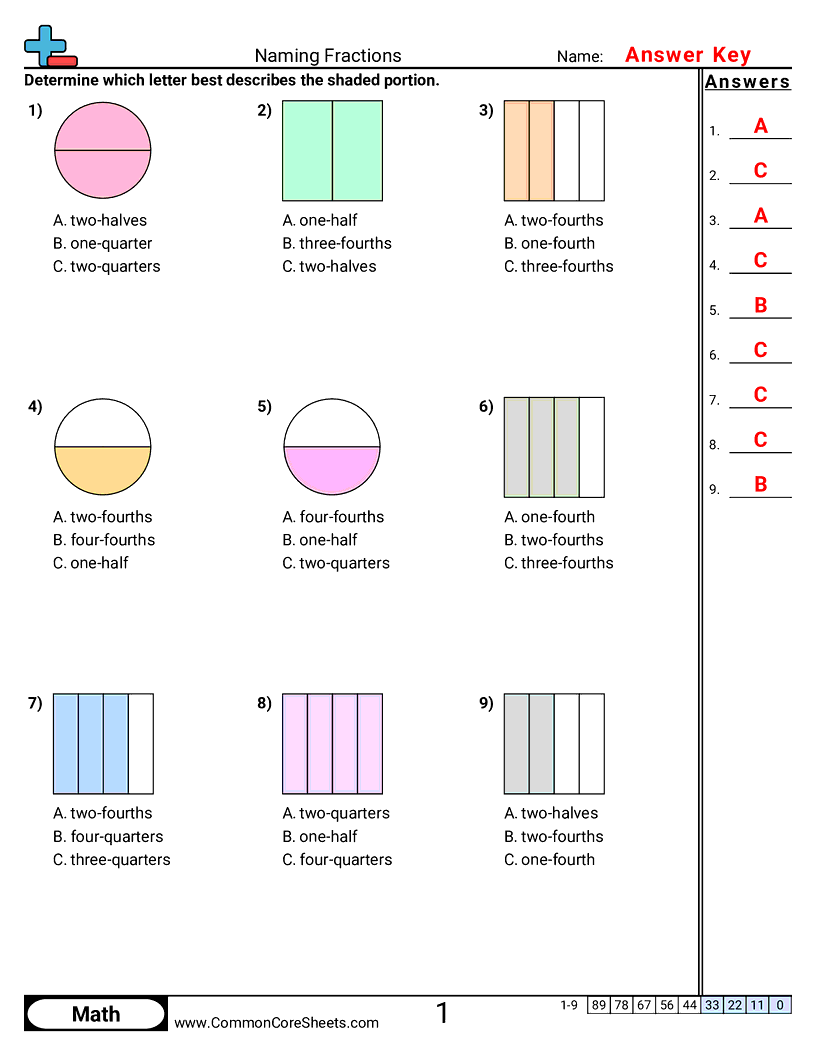
- Match a written fraction name (like “three fourths”) to the correct fraction.
- Use the denominator to tell how many equal parts the whole is split into.
- Use the numerator to tell how many parts are being counted.
2g3
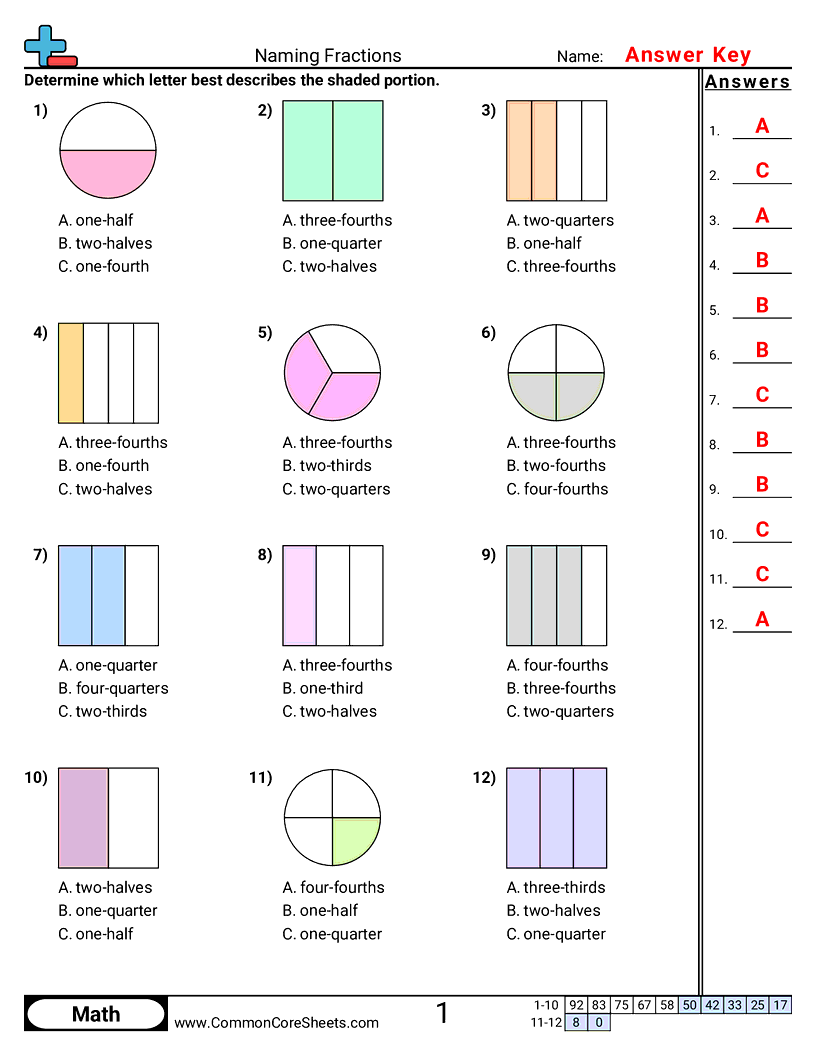
- Read a fraction and say its name using the right word for the denominator (like halves, thirds, or fourths).
- Match a written fraction name to the correct fraction.
- Use the denominator to tell how many equal parts the whole is split into.
- Use the numerator to tell how many parts are being counted.
3nf1
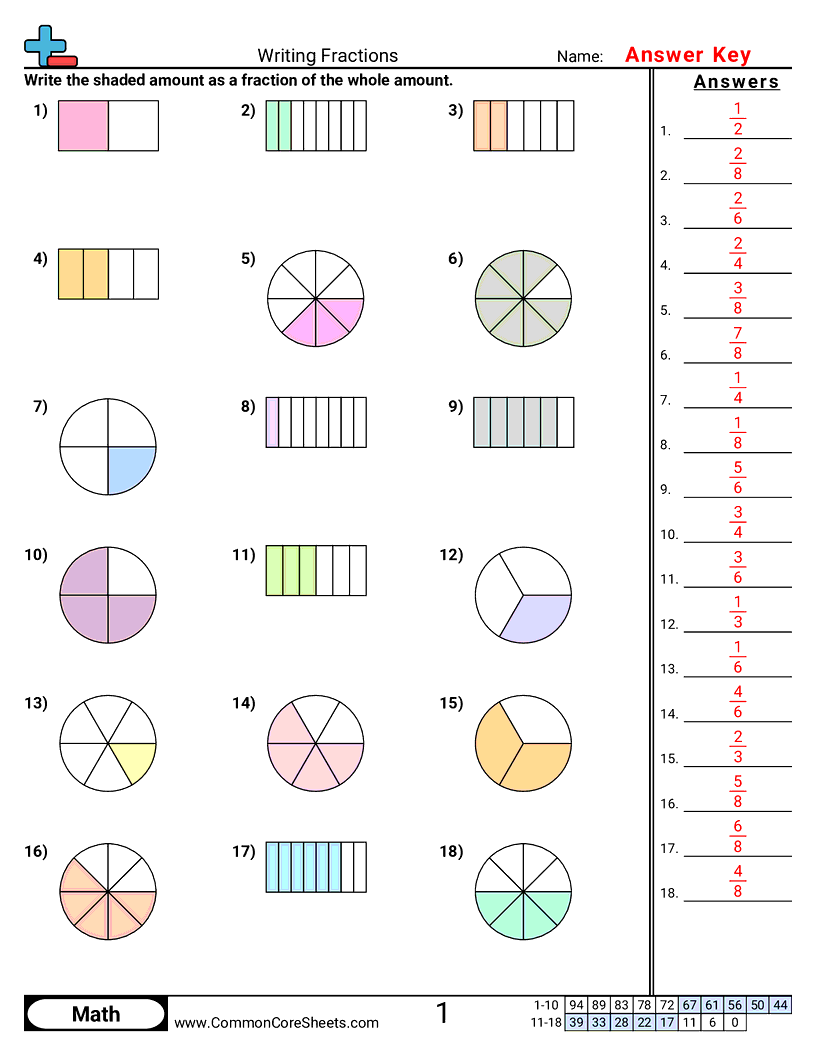
- Look at a picture model and write the fraction it shows.
- Identify the numerator and denominator in a fraction.
- Match a shaded part of a whole to the correct fraction notation.
3nf1
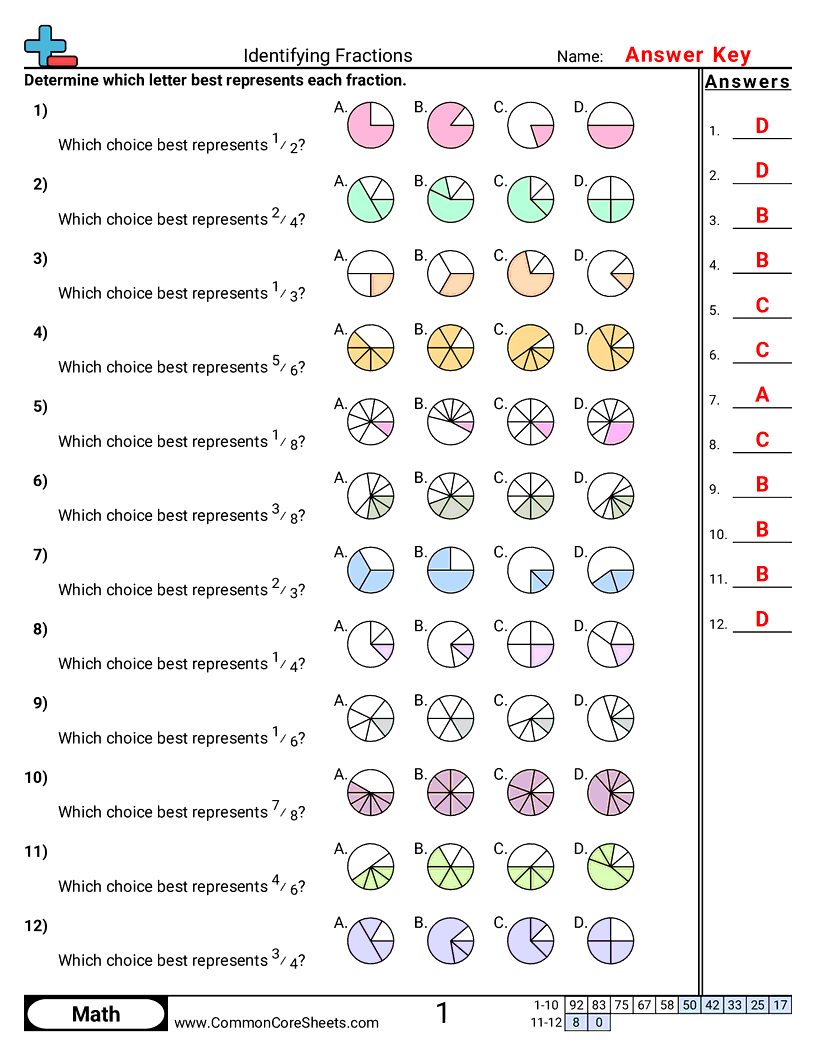
- Match a written fraction to a picture that shows the same amount shaded.
- Tell how many equal parts the whole is split into and how many parts are shaded.
- Notice when pictures show different-sized parts and choose only models with equal parts.
3g2
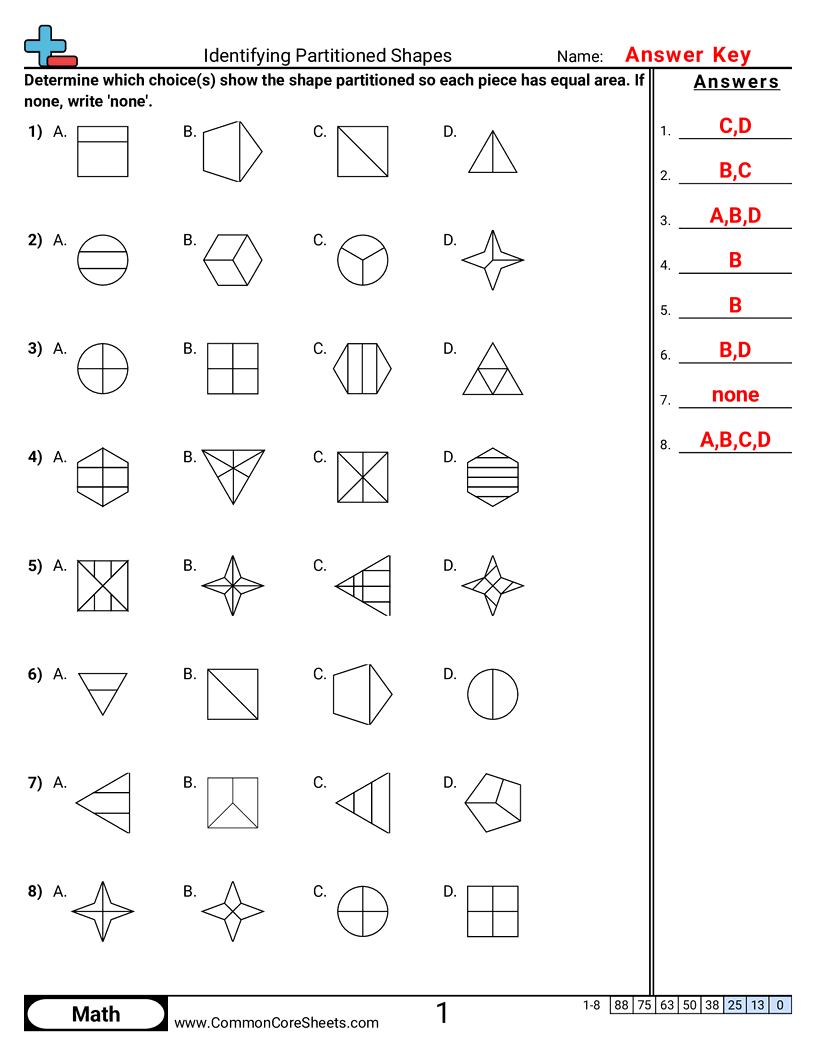
- Split a shape into equal-size parts and explain that each part is the same area.
- Spot when parts are not equal and know that they do not make fair fractions.
3g2
- Decide whether a shape has been split into equal-size parts.
- Tell the difference between equal partitions and uneven partitions in pictures.
- Connect a partitioned shape to the idea of a fraction as equal parts of one whole.
- Explain why a partition is not correct when the pieces are different sizes.
3nf3d
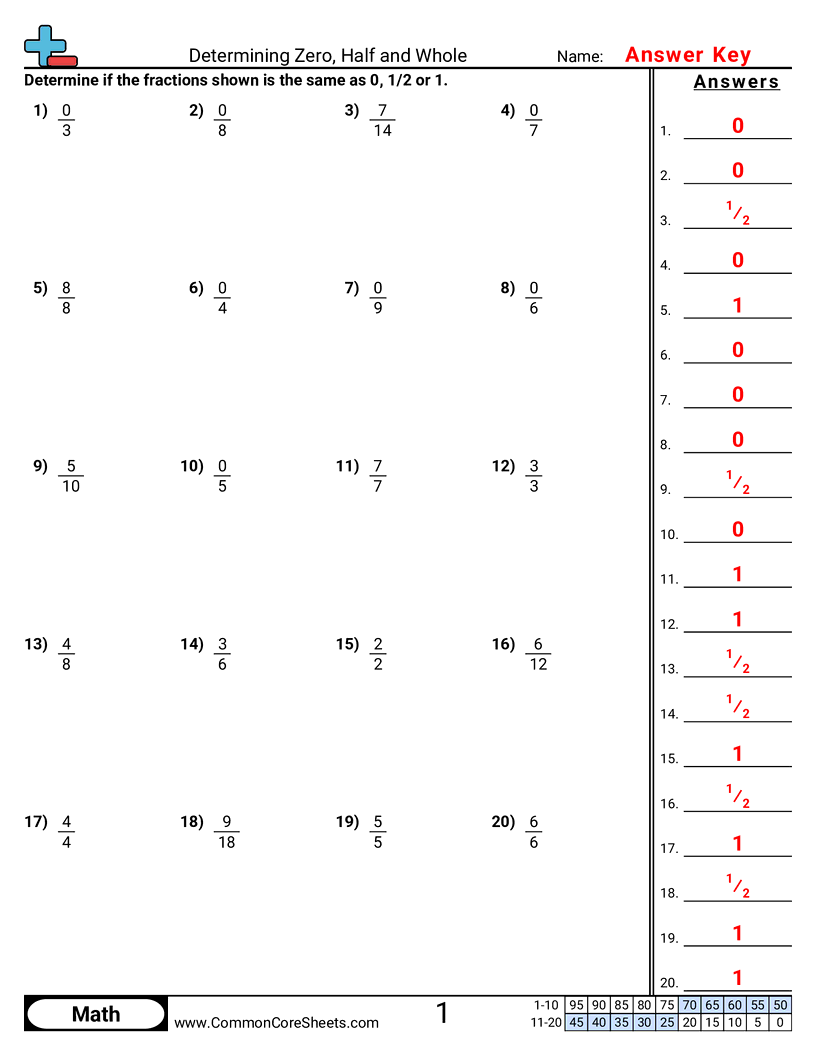
- Decide whether a fraction is equal to 0, 1/2, or 1.
- Use the numerator and denominator to tell when a fraction means none, half, or a whole.
5nf3
- Decide which two whole numbers a fraction falls between.
- Convert an improper fraction to a mixed number fraction to identify the value with whole numbers.
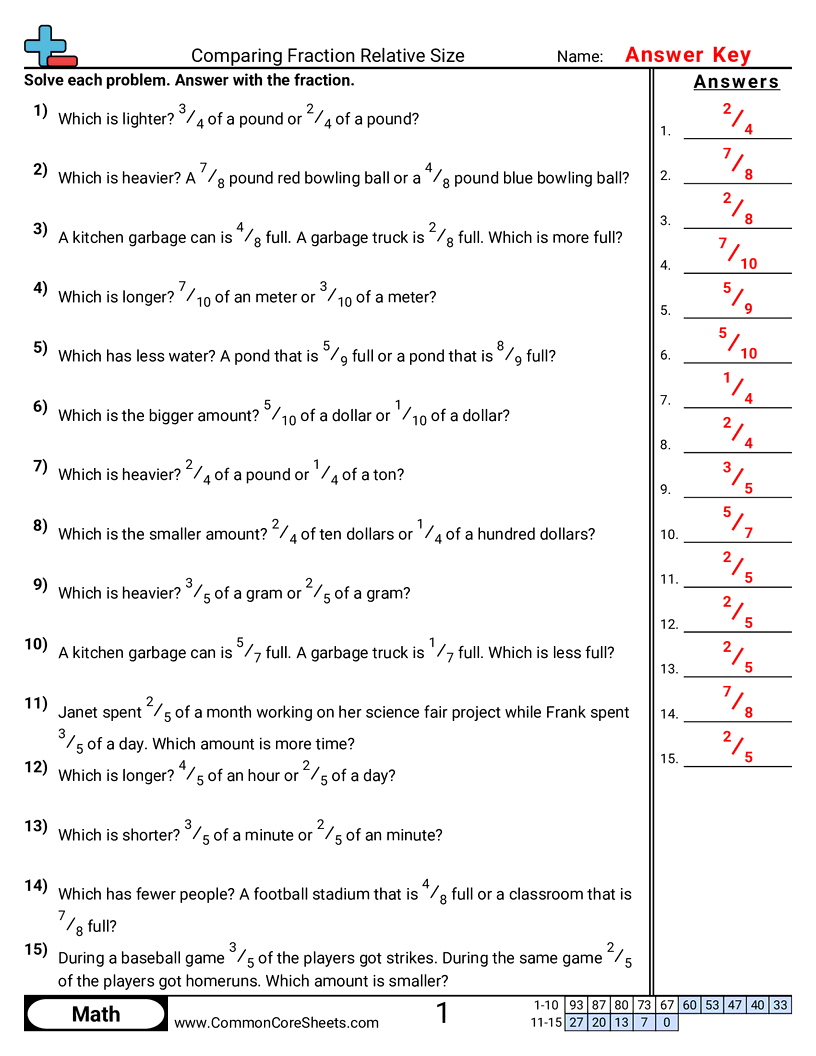
- Understand that the size a fraction represents, depends on the items it is comparing.
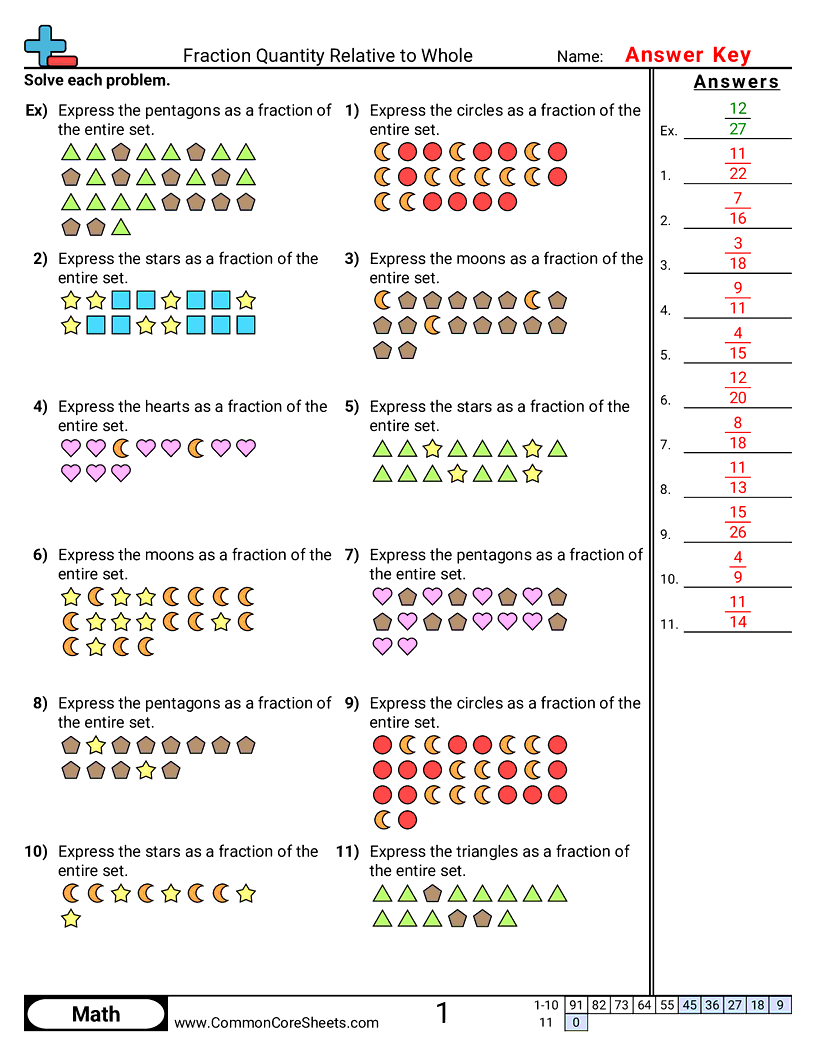
- Explain a fraction as “part of a whole set,” using the numerator as the count shown and the denominator as the total.
- Find the reciprocal of a fraction by swapping the numerator and denominator.
- Use reciprocals to make a multiplication equation equal 1.
- Recognize that a number and its reciprocal are multiplicative inverses.
- Find the missing fraction that completes a whole when one part is given.
- Add fractions with the same denominator to make a total of 1.
- Write the shaded part of a picture as a fraction using a numerator and denominator.
- Count equal parts in a shape to figure out the denominator.
- Count shaded parts to figure out the numerator.
- Match a visual fraction model to the correct numeric fraction notation.
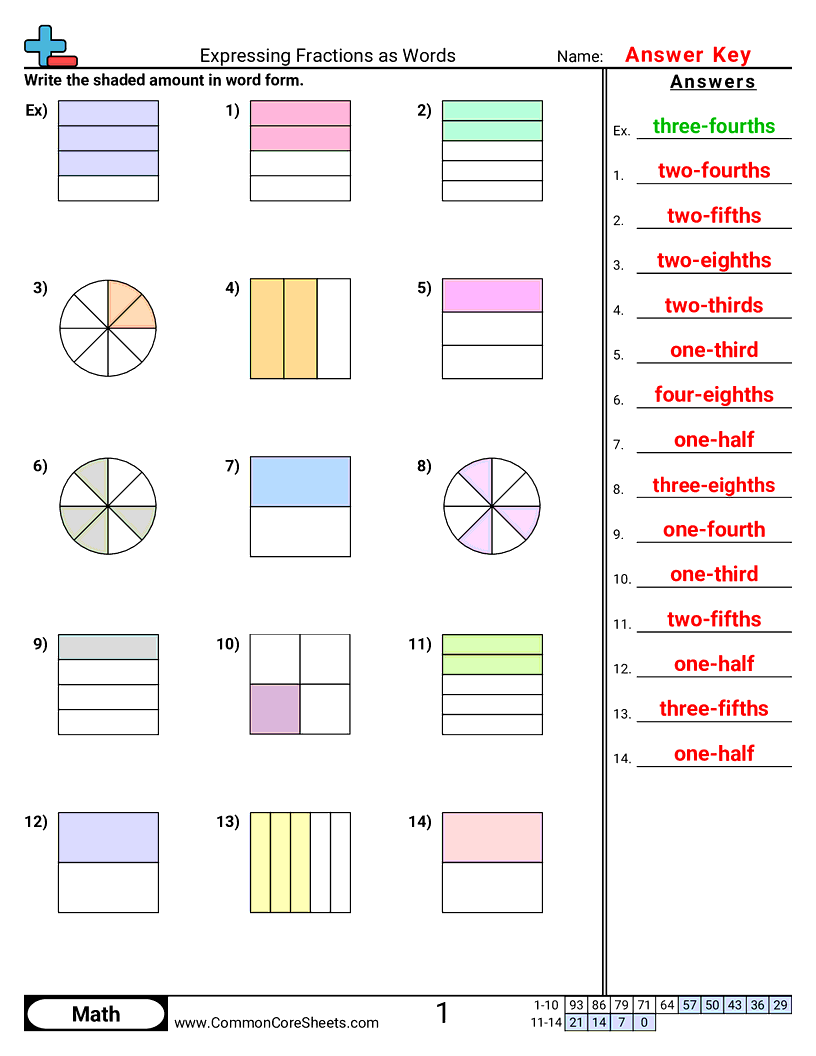
- Read a fraction and say it using the correct words.
- Write a fraction in word form using the right spelling for the denominator (like thirds, fourths, fifths).
- Match the numerator to the correct counting word (one, two, three, etc.) when writing fractions.
- Use singular and plural fraction words correctly (like one half vs. two thirds).