4th Grade Measurement Worksheets
Free measurement worksheets with answer key. No login or account needed. From length and weight to volume and capacity, we've got you covered. A grading column and quick grade scale maker grading a breeze and a modified pages help with lower level learners or when just introducing a topic. Great for teachers or for homeschool.
Browse Sheets By Problem Type
×
About these worksheets
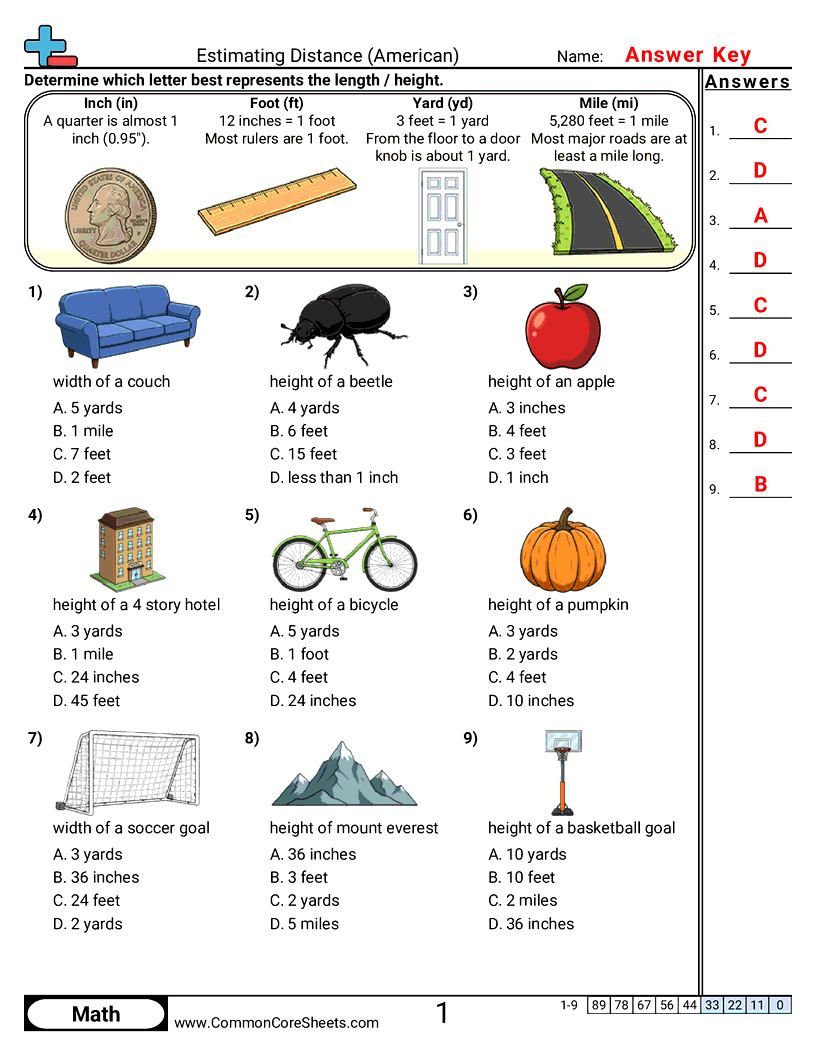
Students practice measuring lengths using American customary units. Worksheets include reading rulers in inches, estimating distances, choosing appropriate units, converting between inches, feet, yards, and miles, adding and subtracting measurements in feet and inches, and working with mixed unit conversions. Resources span second through fifth grade standards.
4md1

- Get better at making a reasonable guess for how long an object is without measuring it.
- Choose the best length from a few options by comparing what you see to familiar sizes (like an inch, foot, or yard).
- Decide which unit makes sense for an object’s length (inches, feet, or yards).
- Use benchmark lengths to tell when an estimate is too short or too long.
4md1

- Choose whether inches, feet, yards, or miles makes the most sense for a given distance.
- Use what you know about common objects and places to make a reasonable estimate of a length.
- Explain why one unit is more appropriate than another for measuring a specific distance.
About these worksheets
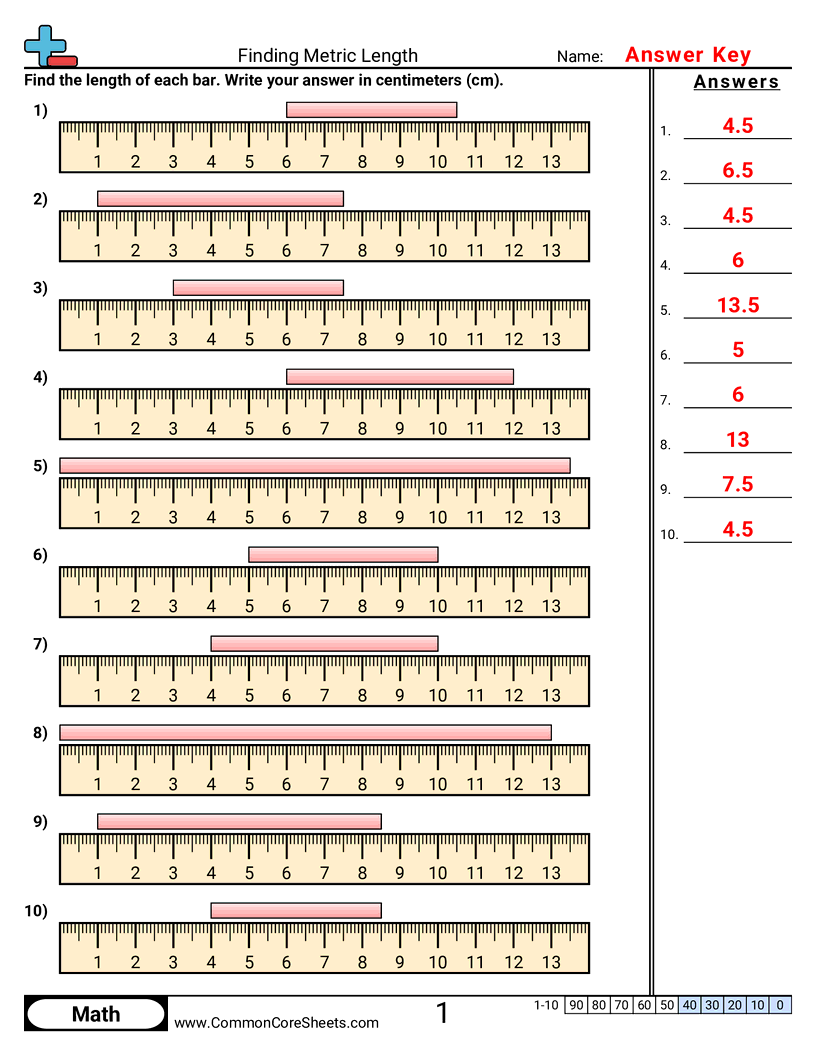
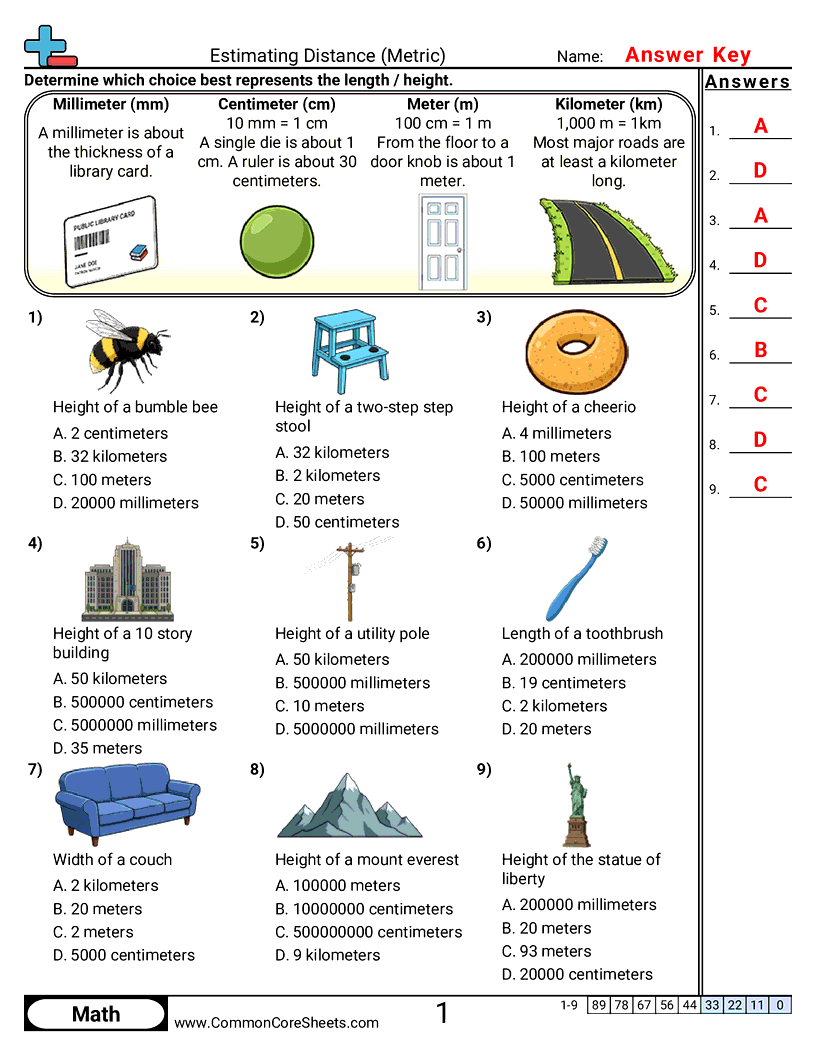
These worksheets cover metric length measurement skills. Students practice reading centimeter and millimeter rulers, estimating metric distances, choosing appropriate metric units, converting between millimeters, centimeters, meters, and kilometers, and adding and subtracting metric lengths. Aligned with fourth and fifth grade standards.
4md1

- Practice reading a centimeter ruler to find the length of a bar, including half-centimeter measurements
- Subtract the starting point from the ending point when the bar doesn't begin at zero
- Measure to the nearest half centimeter using the smaller tick marks on the ruler
4md1

- Practice making a reasonable guess about how long something is using metric units.
- Learn to choose the best unit for a length (millimeters, centimeters, meters, or kilometers).
- Compare a few possible lengths and pick the one that makes the most sense for the object shown.
- Use what you know about common objects to judge about how long something is without measuring.
4md1

- Choose the best metric unit to describe how long something is.
- Tell when millimeters, centimeters, meters, or kilometers make the most sense for an item.
- Compare a few unit choices and pick the one that matches a reasonable real-world size.
- Read a short description of an object and decide which metric measurement fits.
About these worksheets
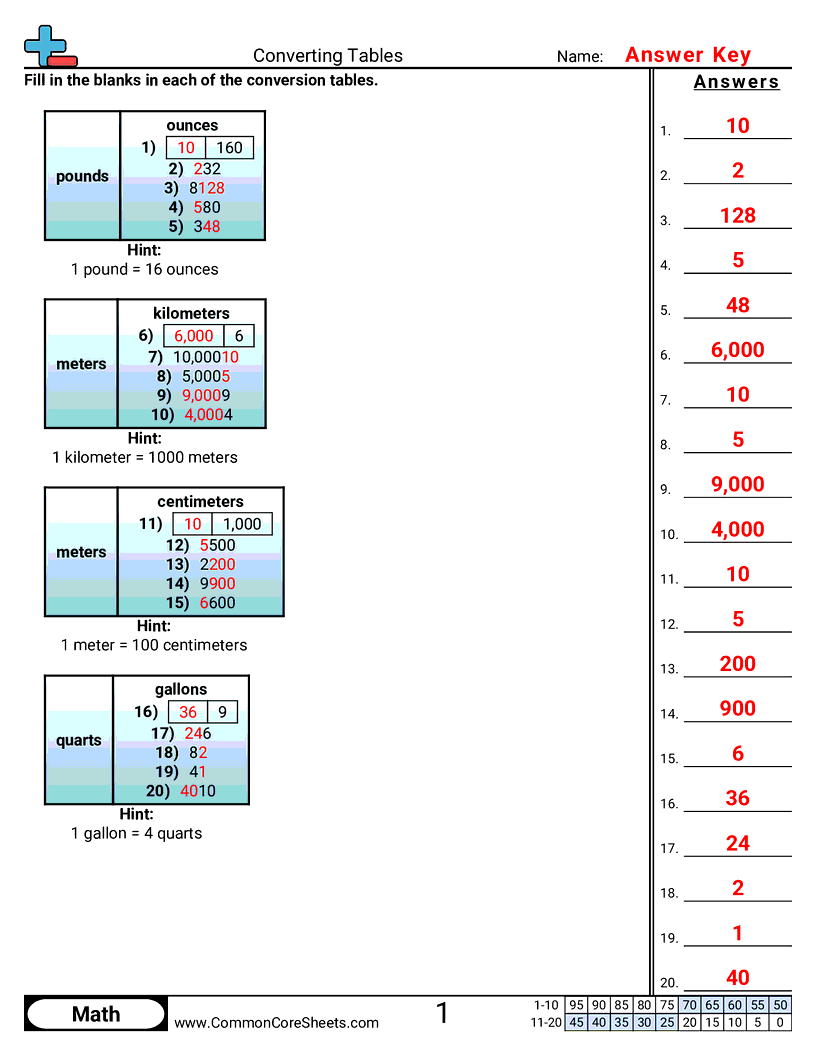
Students work with both American customary and metric measurement systems side by side. Worksheets include measuring objects in both inches and centimeters, estimating lengths using both systems, filling in conversion tables, and balancing equations with mixed units. These activities help students see the relationship between the two measurement systems. Aligned with second through fourth grade.
4md1

- Convert between larger and smaller units of length, weight, and liquid volume.
- Use a conversion table to find the matching value in a different unit.
- Multiply or divide by a conversion factor to fill in missing measurements.