Free multiplication worksheets with answer key. No login or account needed. From traditional multiplication problems to visual multiplication problems and word multiplication problems, we've got you covered. A grading column and quick grade scale maker grading a breeze and a modified pages help with lower level learners or when just introducing a topic. Great for teachers or for homeschool.
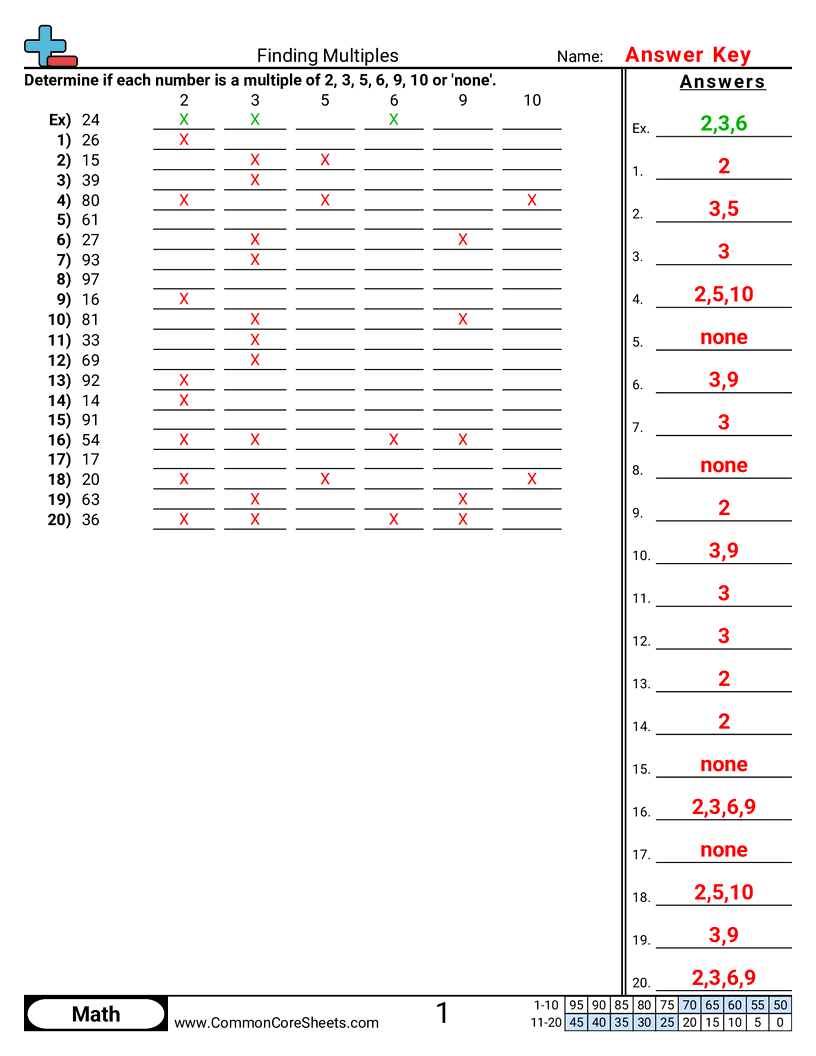
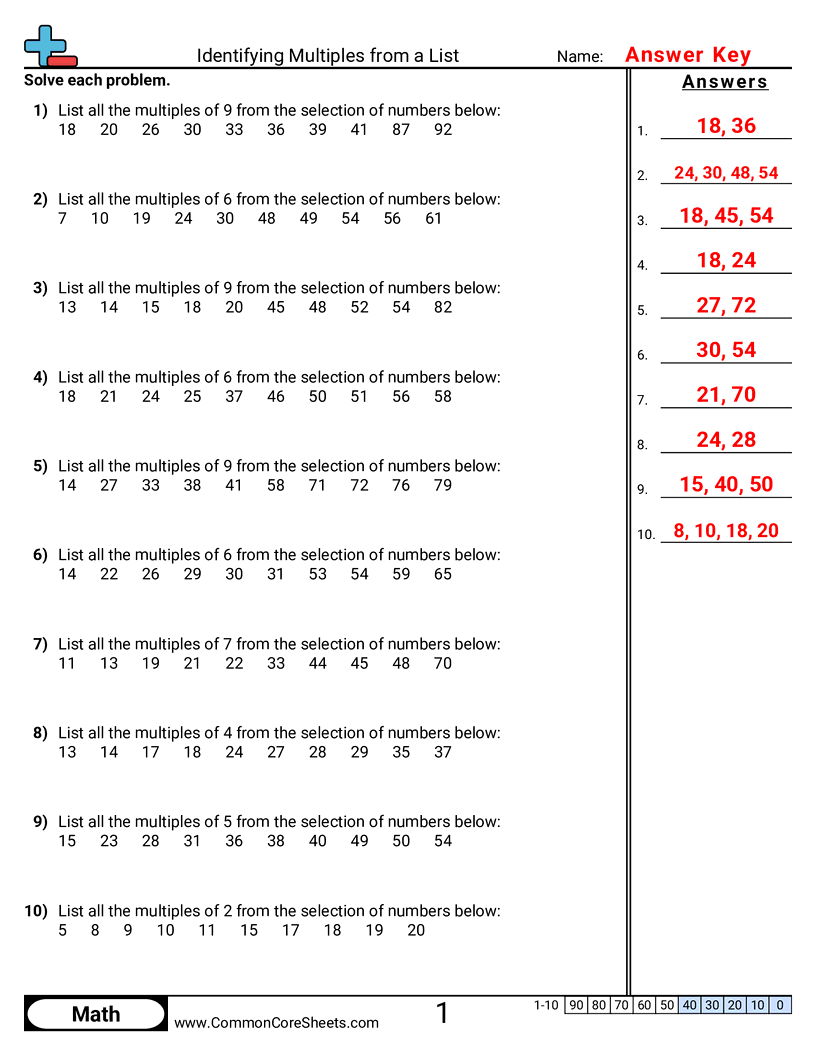
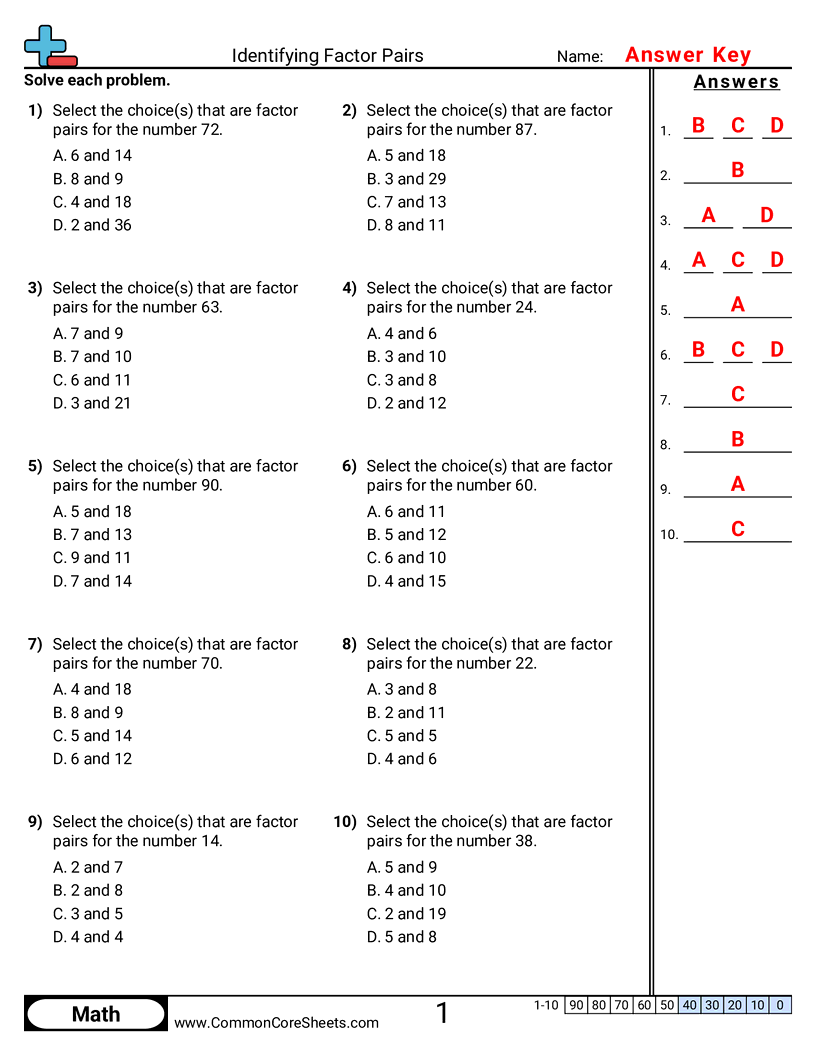
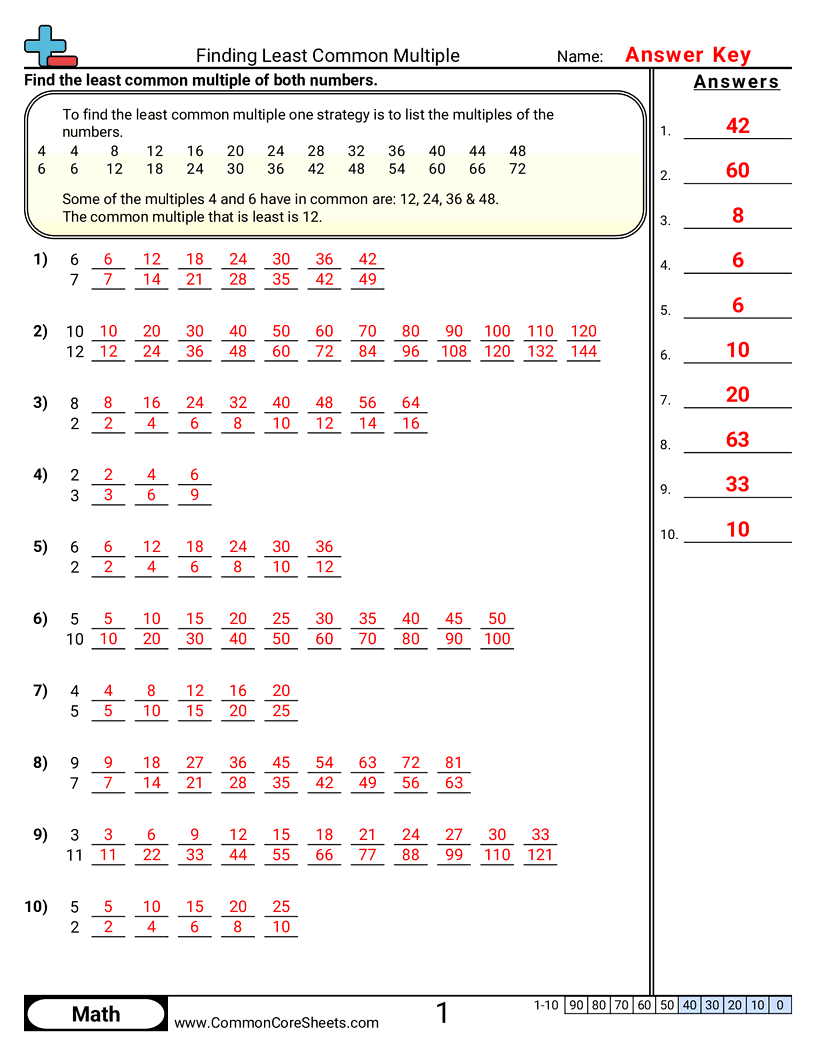
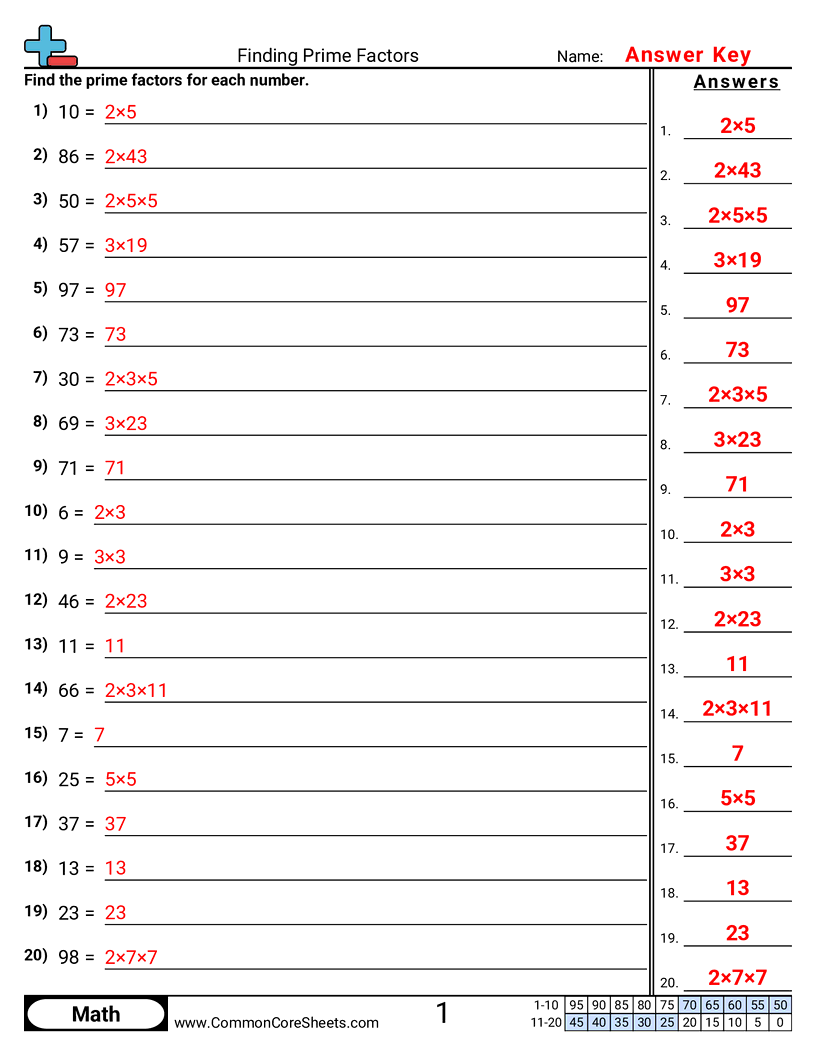
These worksheets develop students' understanding of multiples, factors, and prime numbers. Activities include identifying multiples of a number, using divisibility rules for 2, 3, 5, 6, 9, and 10, finding the least common multiple of two numbers, and determining prime factorizations. Aligned with fourth and sixth grade standards.
Use multiple rules (multiples of 3 have digits that add to 3, multiples of 5 end in 5 or 0, etc) to determine if a number is a multiple of another number.
Use multiplication facts to decide which numbers are multiples of a given number.