multiplying 10s Worksheets
Free multiplication worksheets with answer key. No login or account needed. From traditional multiplication problems to visual multiplication problems and word multiplication problems, we've got you covered. A grading column and quick grade scale maker grading a breeze and a modified pages help with lower level learners or when just introducing a topic. Great for teachers or for homeschool.
Browse Sheets By Problem Type
×
About these worksheets
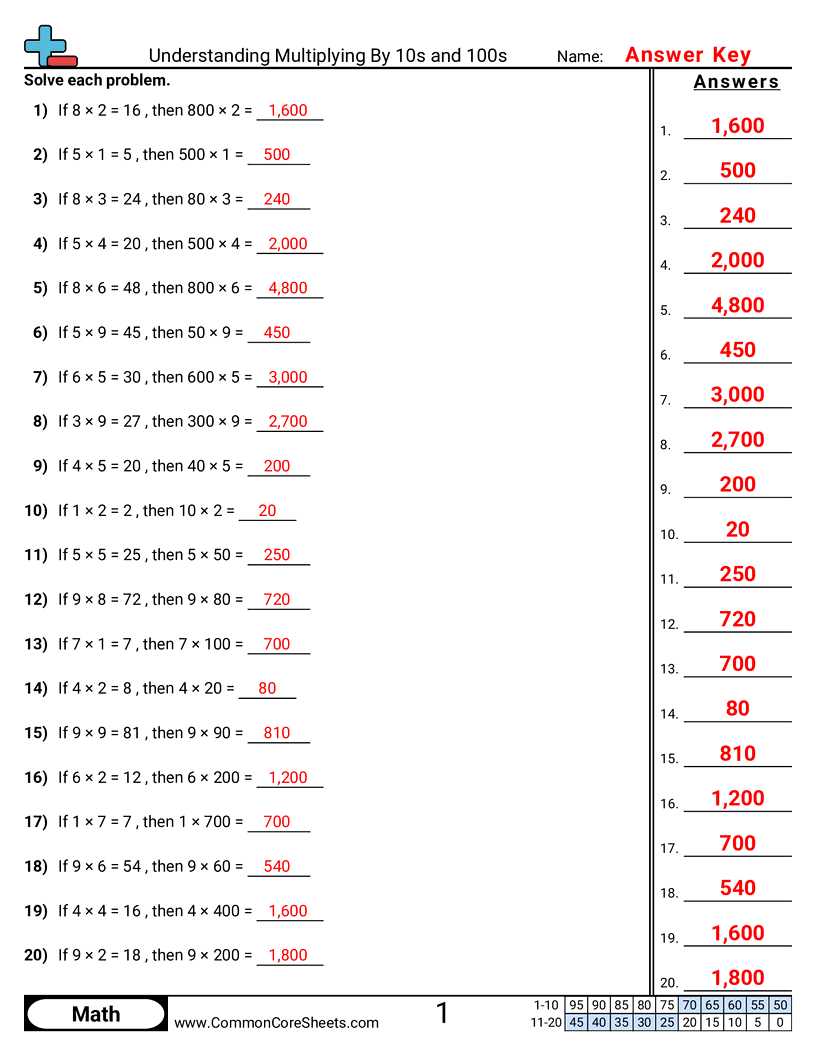
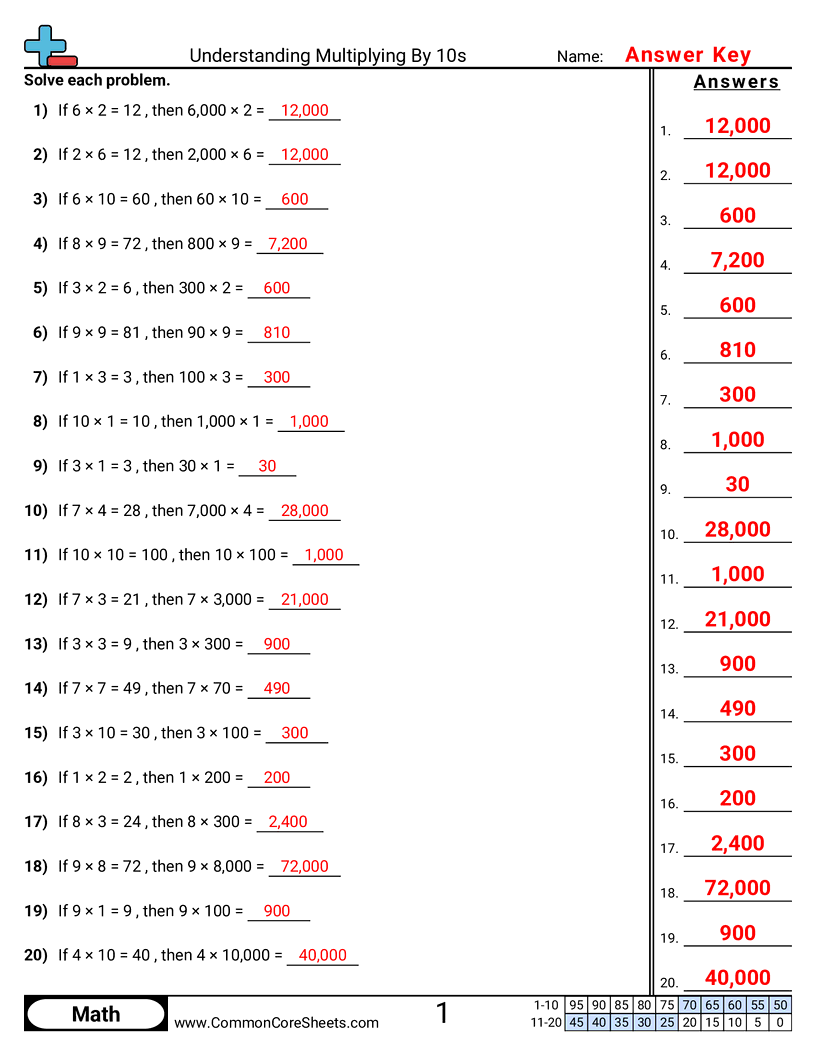
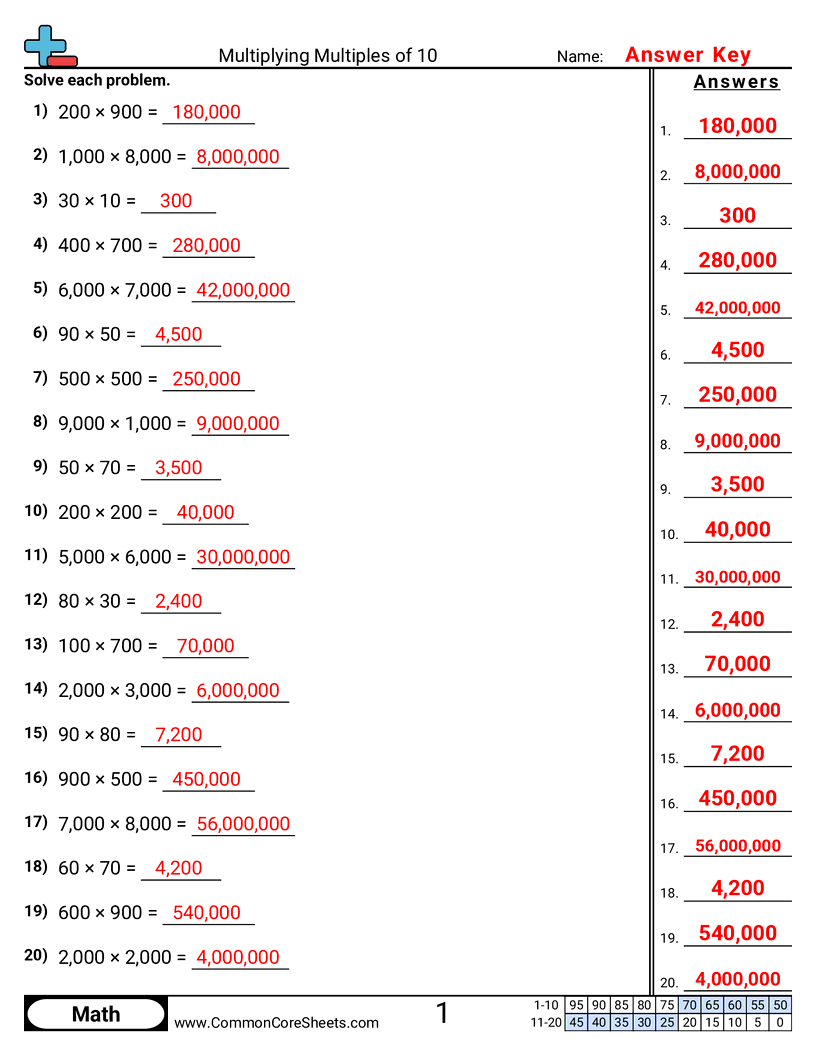
Students practice multiplying with multiples of ten across increasing complexity levels. Worksheets cover single-digit times multiples of ten, two-digit times multiples of ten, multiplying by 10s and 100s, and multiplying when both factors are multiples of ten. These activities reinforce place value patterns in multiplication. Aligned with third through fifth grade.
3oa1

- Multiply a one-digit number by 10, 20, 30, and other tens numbers.
- Use place value to see why multiplying by a multiple of 10 makes the number bigger in a predictable way.
- Use the pattern of adding a zero (or shifting digits left) to solve these problems quickly in your head.
4nbt1

- Multiply a two-digit number by 10, 20, 30, and other tens numbers.
- Use place value patterns to multiply by tens (shifting digits and adding zeros).
- Solve multi-digit multiplication problems accurately without a calculator.
4nbt1

- Multiply a two-digit number by 10, 20, 30, and other tens numbers.
- Use place value patterns to multiply by tens (shifting digits and adding zeros).
- Solve multi-digit multiplication problems accurately without a calculator.
5nbt2

- Multiply a one-digit number by tens and hundreds.
- Use place value to see how multiplying by 10 or 100 changes the digits.
- Write products correctly with the right number of zeros.
5nbt2

- Multiply a one-digit number by 10, 100, or 1,000.
- Use place value patterns to see how the digits shift when you multiply by powers of 10.
- Spot and use patterns in a set of related multiplication facts (like 6×10, 6×100, 6×1,000).

- Multiply numbers when one or both factors end in zero.
- Use place value to add the right number of zeros to the product.
- Spot and use patterns when counting by tens, hundreds, or thousands to multiply faster.
- Multiply a basic fact first and then scale it up by 10, 100, or 1,000.