preparing for multiplication Worksheets
Free multiplication worksheets with answer key. No login or account needed. From traditional multiplication problems to visual multiplication problems and word multiplication problems, we've got you covered. A grading column and quick grade scale maker grading a breeze and a modified pages help with lower level learners or when just introducing a topic. Great for teachers or for homeschool.
Browse Sheets By Problem Type
×
Preparing For Multiplication
About these worksheets
These worksheets build the prerequisite skills students need before formal multiplication. Activities include writing arrays as addition and multiplication equations, doubling and halving numbers, partitioning rectangles into rows and columns, multiplying by multiples of ten, rewriting repeated addition as multiplication, using number lines, reading multiplication tables for patterns, estimating reasonable products, and interpreting multiplication in word problems. Resources span second through fourth grade.
2oa4
Read an array and tell how many rows and columns it has. Write an addition equation that matches an array by using repeated addition. Explain how an array shows equal groups of the same number.
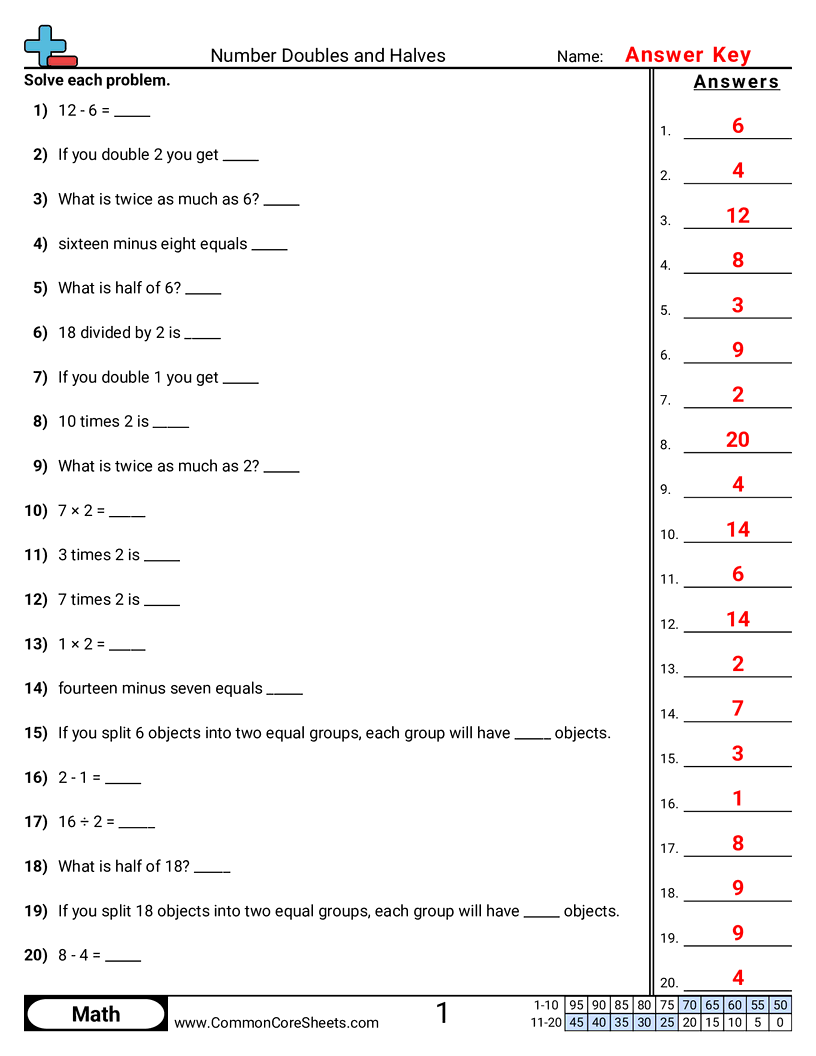
Practice finding doubles of a number (2 times as many). Practice finding half of a number by dividing by 2.
2oa4
Read a rectangular array by counting how many rows and how many columns it has. Write a multiplication equation that matches an array (rows × columns = total). Use repeated addition to explain what the array shows and connect it to multiplication. Switch the factors (like 3 × 4 and 4 × 3) and see that the total stays the same.
2g2
Count how many equal boxes are made when a rectangle is split into rows and columns. Use rows × columns to find the total number of boxes in a rectangular grid. Read a partitioned rectangle and describe it using the number of rows and columns.
3nbt3
Multiply a one-digit number by 10, 20, 30, and other multiples of ten. Use place value patterns to multiply by tens by adding a zero to the end of the number.
3oa1
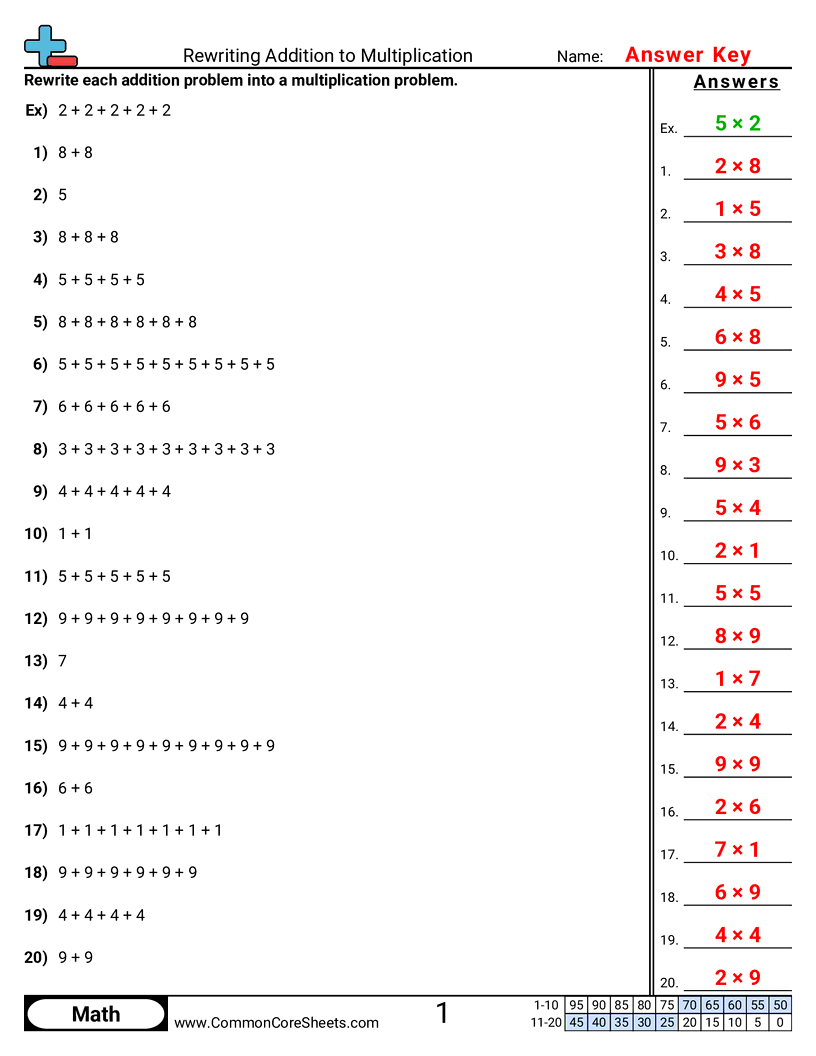
Turn repeated addition (like 4 + 4 + 4) into a multiplication fact (3 × 4). Count how many equal addends there are and use that number as one factor. Identify the number being repeated and use it as the other factor.
3oa1
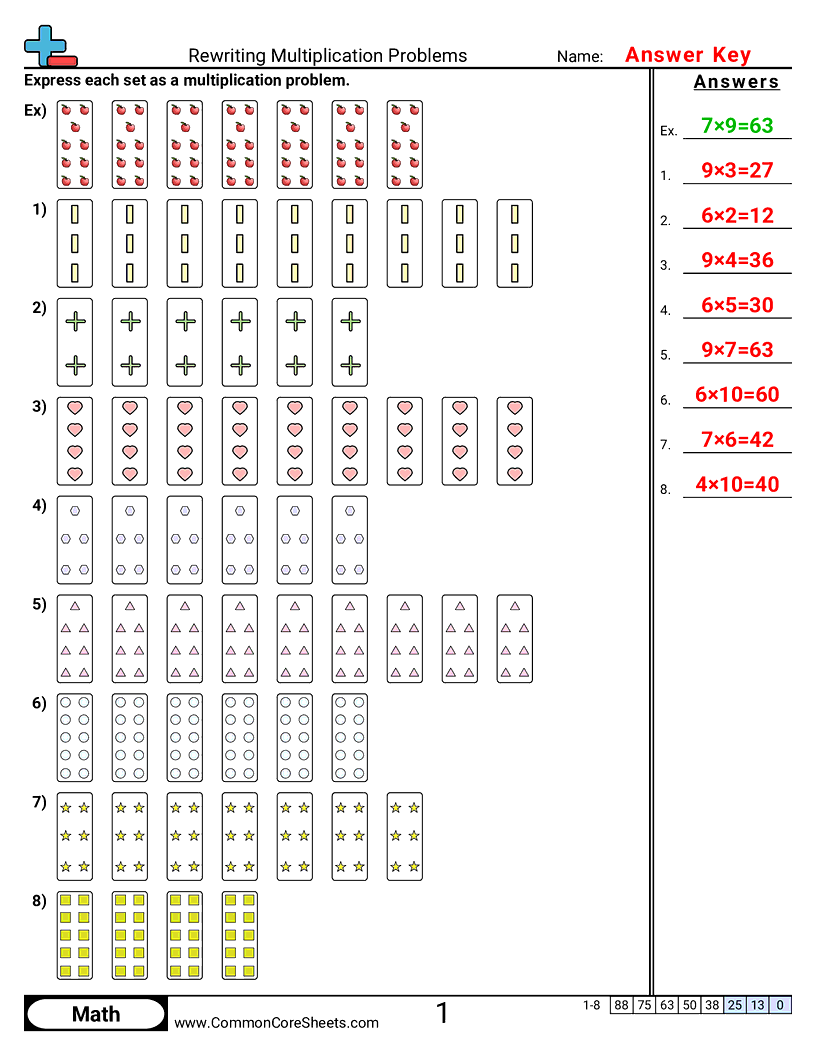
Turn a picture or description of equal groups into a multiplication equation. Identify the number of groups and how many are in each group. Write multiplication using clear factor × factor = product form.
3oa1
Turn repeated addition (like 4 + 4 + 4) into a multiplication fact (3 × 4). Count how many equal addends there are and use that number as one factor. Identify the number being repeated and use it as the other factor.
3oa3
Look at a picture or array and write the matching multiplication equation. Rewrite repeated addition as a multiplication fact. Decide which factor tells the number of groups and which factor tells how many are in each group. Use multiplication facts from 1s to 10s to find the total shown in a model.
3oa1
Use a number line to show multiplication as equal jumps. Count the jumps to find the total product. Connect repeated addition on a number line to a multiplication fact.
3oa9
Use a multiplication table to find the product of two numbers. Look for patterns across rows and columns, like skip-counting by a number. Notice how switching the factors gives the same product (like 3×6 and 6×3). Explain why certain products repeat or line up in the table.
4nbt5
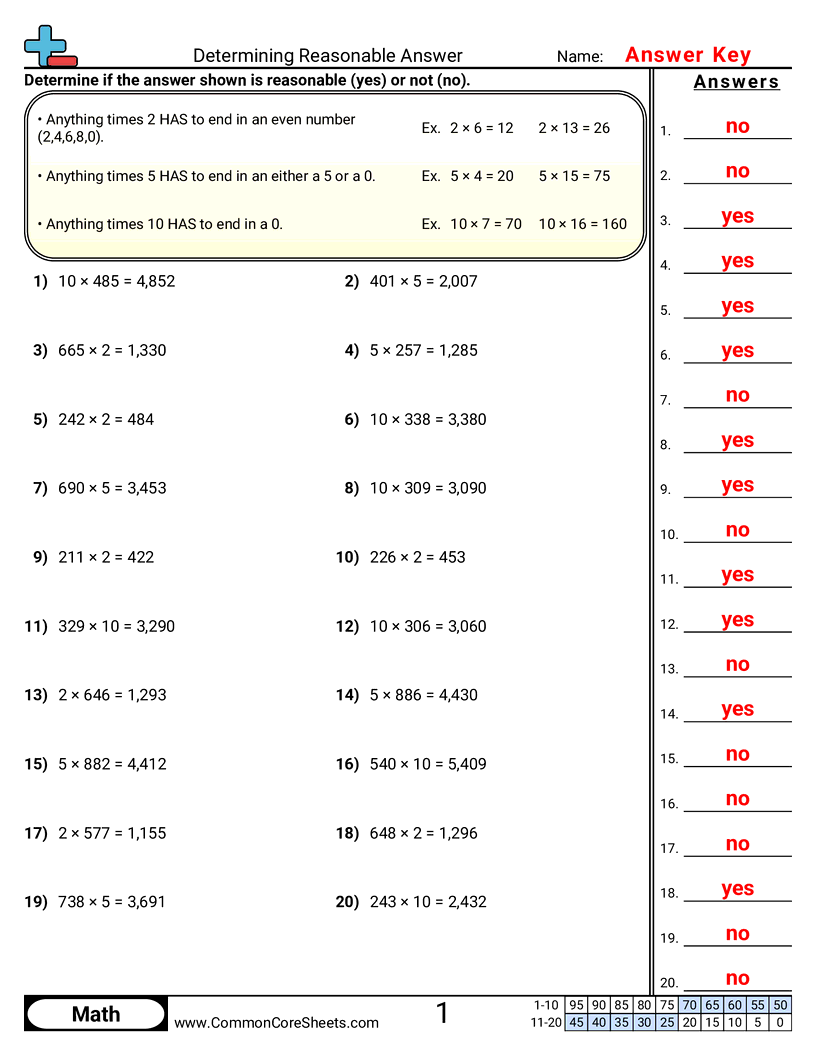
Decide whether a multiplication answer makes sense before accepting it. Use rounding to 2, 5, and 10 as quick benchmarks to estimate a product. Compare an exact-looking product to an estimated range to spot answers that are too big or too small.
4oa1
Read a word problem and decide what the multiplication is really asking. Identify the two factors in a situation (how many groups and how many in each group).
Playwire Advertisement