Patterns & Function Machine Worksheets
Free patterns & function machine worksheets with answer key. No login or account needed. From identifying and extending patterns, evaluating function machines, to solving word problems involving patterns and functions, we've got you covered. A grading column and quick grade scale maker grading a breeze and a modified pages help with lower level learners or when just introducing a topic. Great for teachers or for homeschool.
Browse Sheets By Problem Type
×
About these worksheets
Function machine worksheets develop input-output reasoning skills. Students figure out the rule a function machine uses — whether addition, subtraction, multiplication, division, or a two-step operation — by analyzing input-output pairs, then apply the rule to find missing values. Resources span third through sixth grade.
3oa9


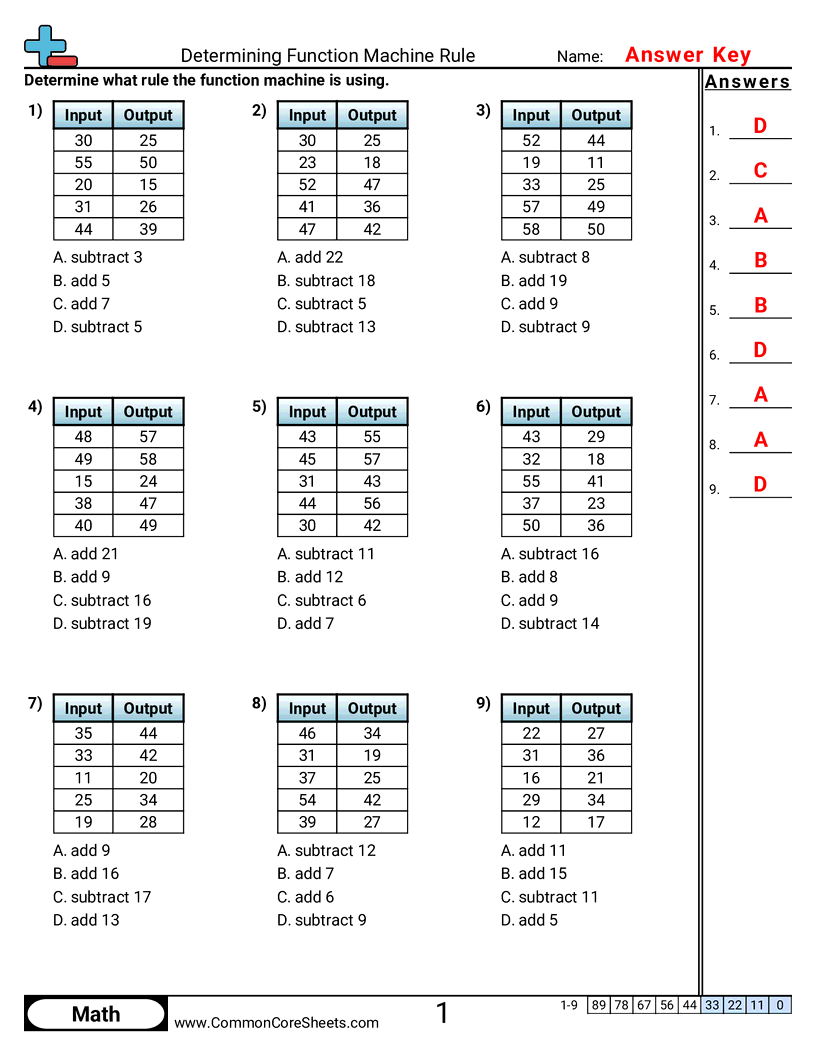
- Figure out what number is being added or subtracted to turn each input into the output.
- Use a few input-output examples to spot a consistent pattern and name the rule.
- Check that the same rule works for every pair in the table before choosing an answer.
- Tell the difference between an “add” rule and a “subtract” rule by comparing inputs and outputs.
3oa9
- Use a few input-output examples to spot a consistent pattern and write the rule.
- Check that the rule works by testing it on another input-output pair.
6rp3a
- Figure out the missing input or output number when a machine adds, subtracts, multiplies, or divides by a rule.
- Use the given input-output pairs to identify the operation and number being used in the rule.
- Work backward through an operation to find an unknown value (like undoing +, −, ×, or ÷).
- Check that a rule works for more than one pair in the table before filling in the blank.
- Figure out what number is being added or subtracted by looking at an input and its output.
- Use addition and subtraction facts within 50 to check which rule makes the outputs match.
- Choose the correct rule from a few options by testing it on the numbers shown.
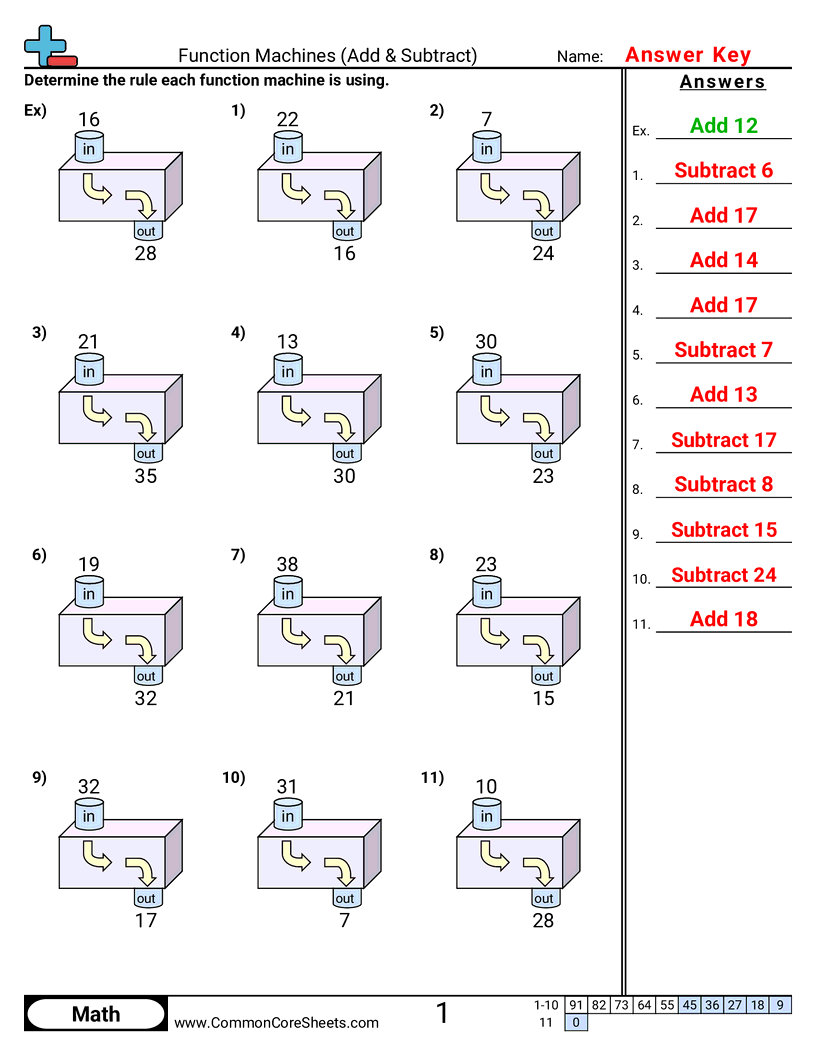
- Figure out what a function machine is doing by looking at the input and output numbers.
- Use addition and subtraction to find the rule that changes one number into another.
- Figure out what a function machine is doing by looking at the input and output numbers.
- Use addition and subtraction to find the rule that changes one number into another.
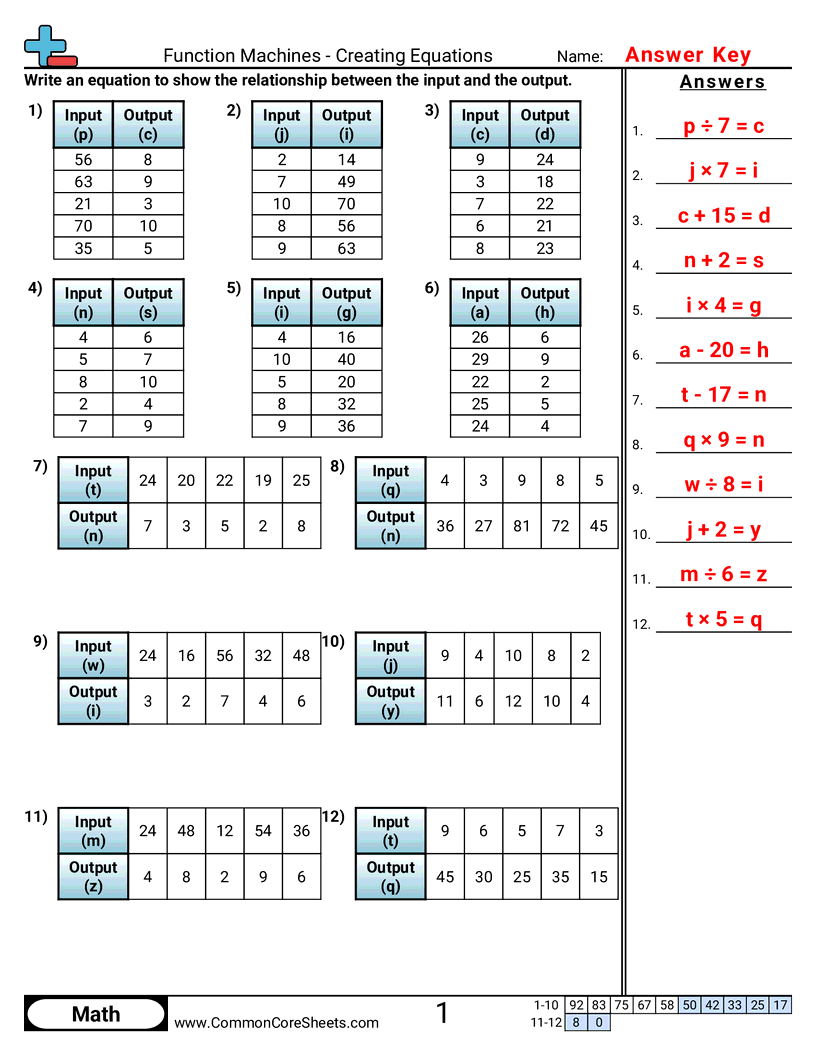
- Figure out the rule that changes an input number into an output number using a letter like x or n.
- Use two-step rules that mix operations like add/subtract and multiply/divide.
- Check that a rule works by plugging in different inputs and seeing if you get the matching outputs.
Determining Pattern Rules
Link
About these worksheets
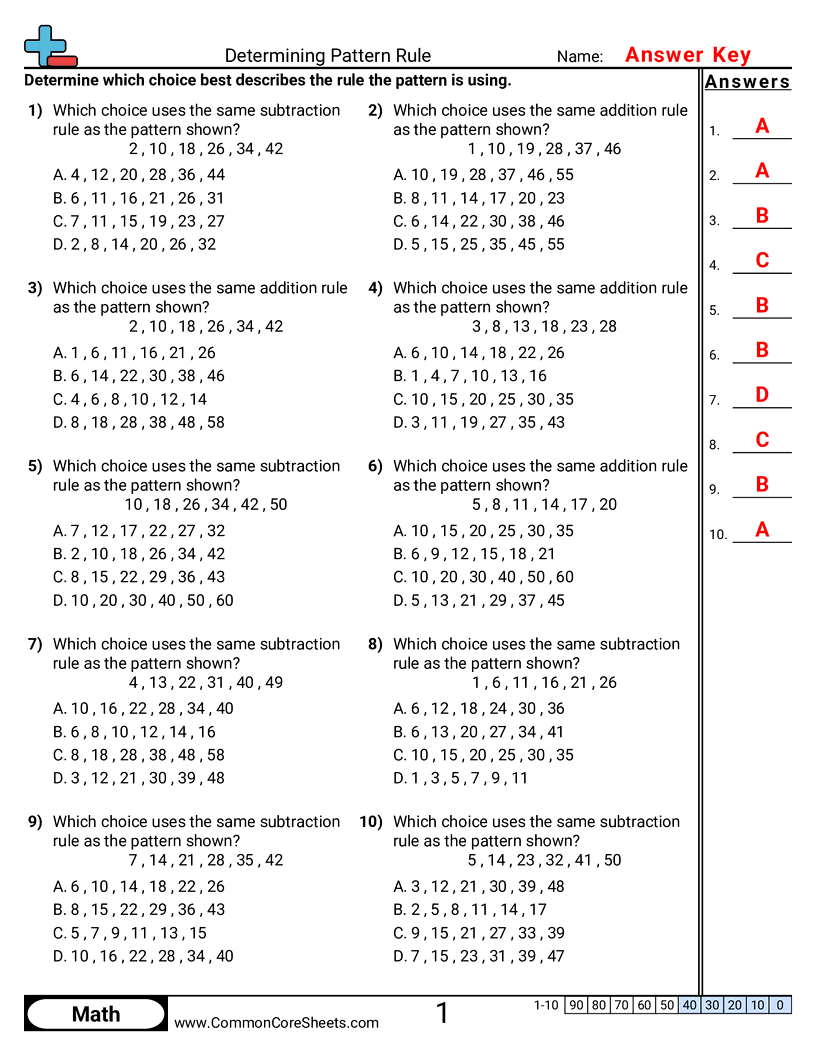
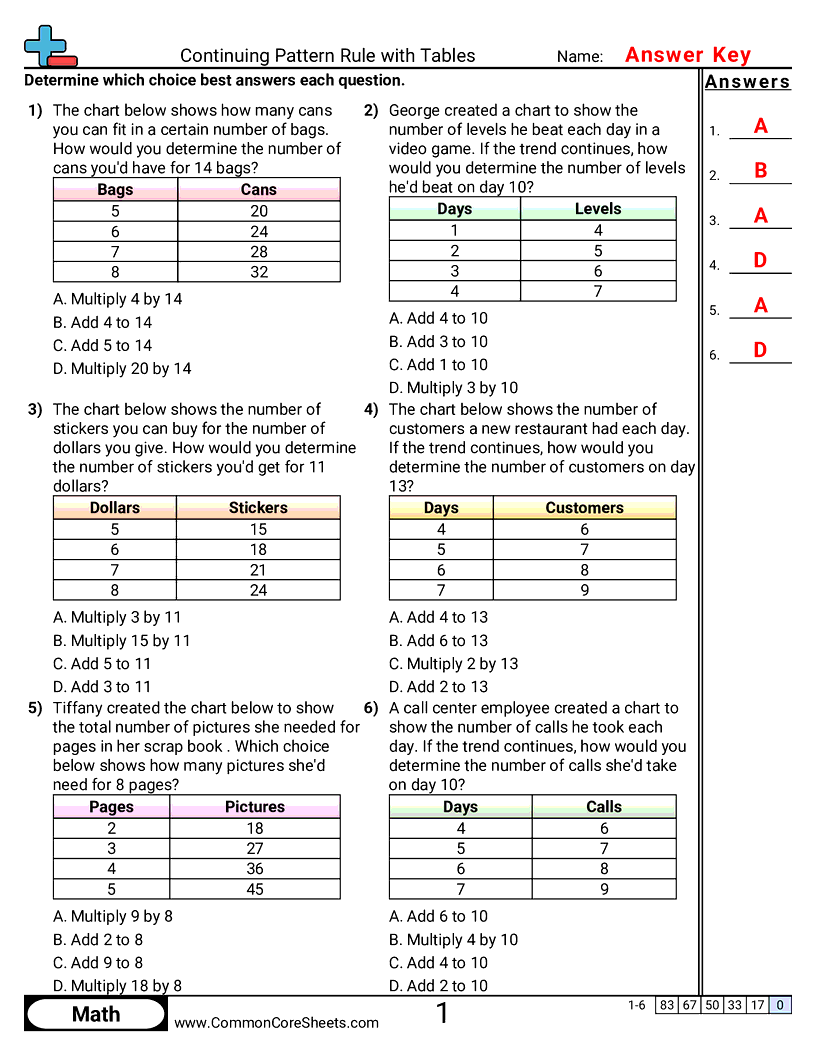
These worksheets help students identify and describe pattern rules. Activities include spotting attributes in number patterns, creating patterns from given rules, writing equations from function machine data, and determining whether patterns use addition, subtraction, multiplication, or division. Worksheets also include matching patterns and using tables to continue rules. Spanning fourth and fifth grade standards.
4oa5
- Spot what stays the same and what changes in a number pattern.
4oa5
- Create your own number pattern by adding or subtracting the same amount each time.
- Use the rule to figure out a missing number later in the pattern.
- Explain the pattern rule in words or as a simple math sentence (like “add 3 each time”).
5oa3
- Figure out the rule a function machine is using by looking at the input and output numbers.
- Write an equation that matches a number pattern, using a variable for the input.
- Decide which operation (add, subtract, multiply, or divide) connects the input to the output.
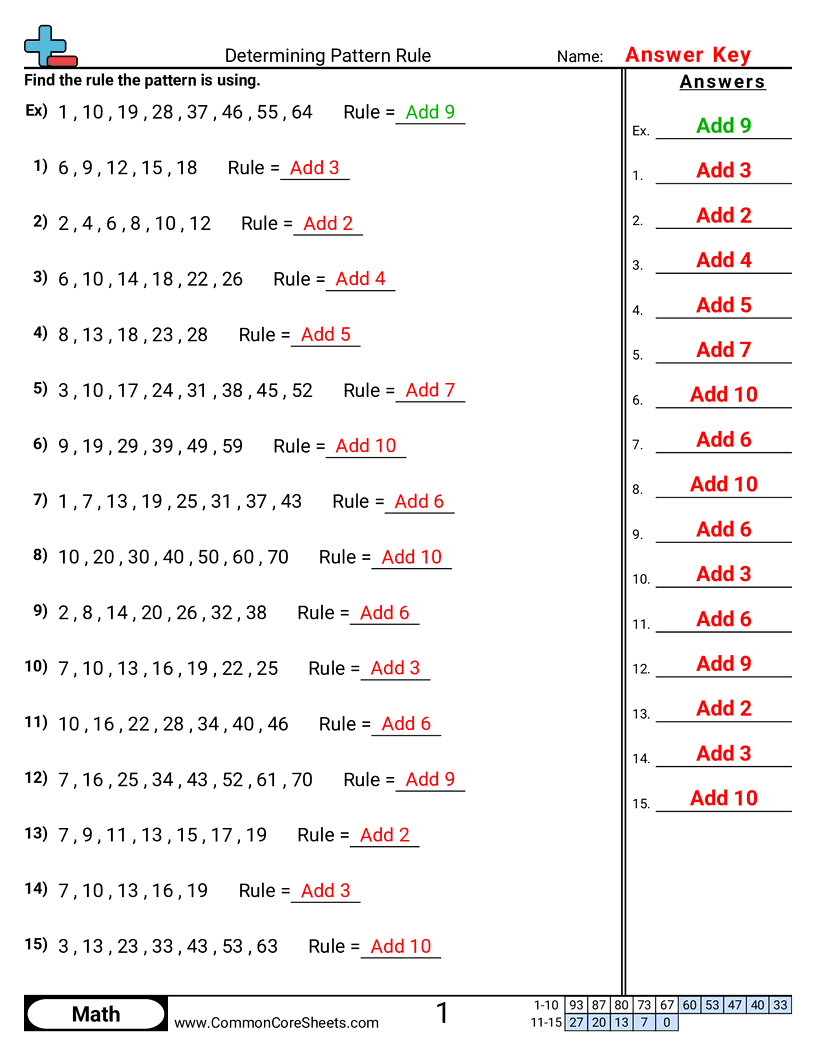
- Figure out what operation is happening in a number pattern (add, subtract, multiply, or divide).
- Explain the pattern rule in simple words, like “add 3 each time.”
- Check that a rule works for every step in the pattern, not just one pair of numbers.
- Figure out what operation (add, subtract, multiply, or divide) changes one number into the next in a pattern.
- Compare answer choices and pick the rule that matches all the numbers in the pattern.
- Figure out the rule in a number pattern by looking at how the numbers change.
- Compare two patterns and decide if they follow the same rule.
- Figure out the rule that connects the input and output numbers in a table.
- Check that the same rule works for every row in the table.
Continuing Number Patterns
Link
About these worksheets
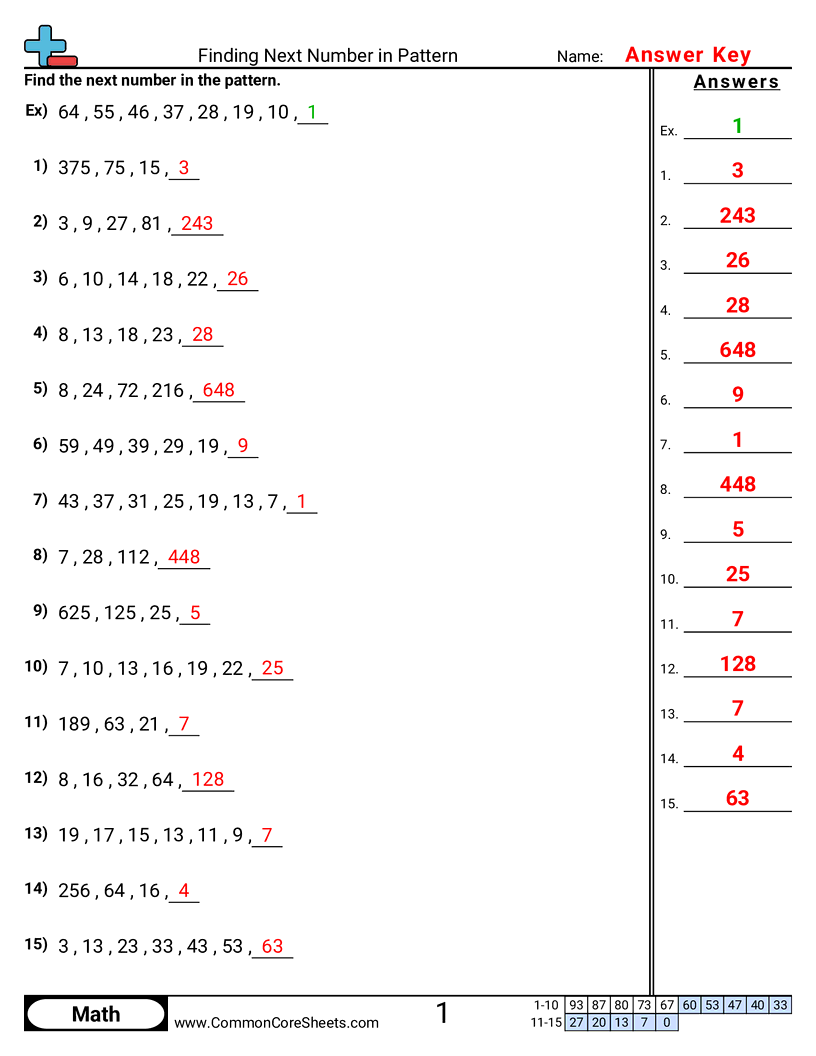
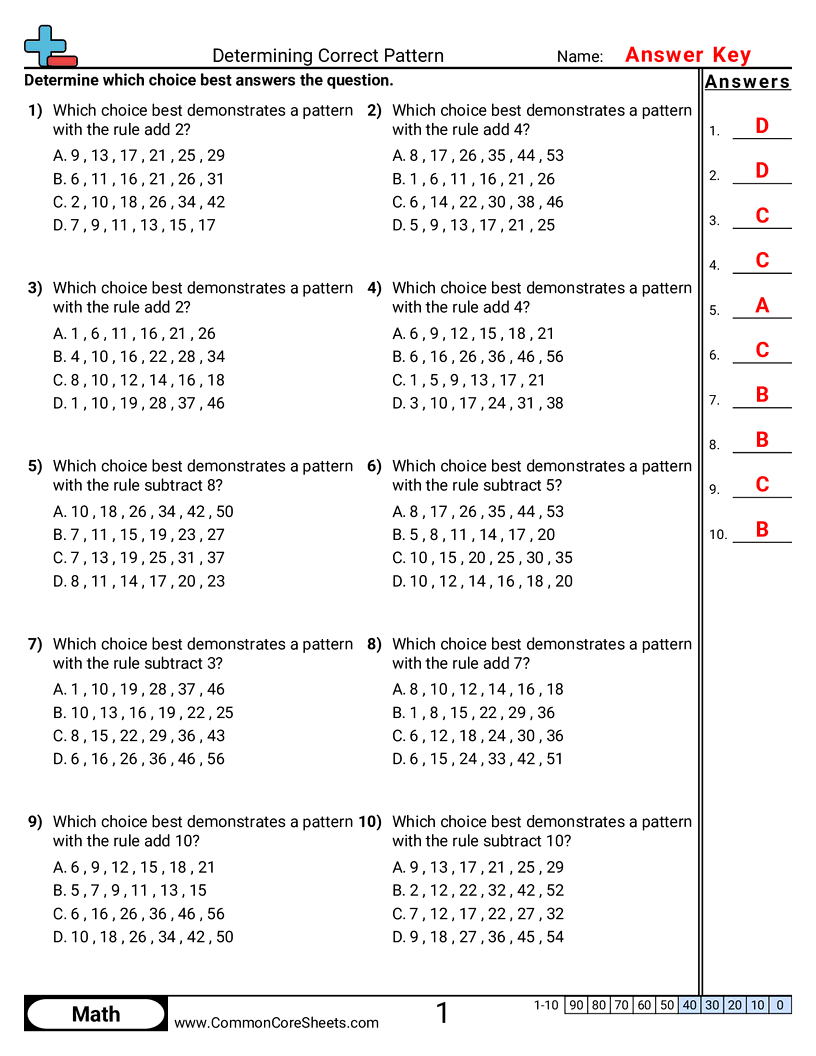
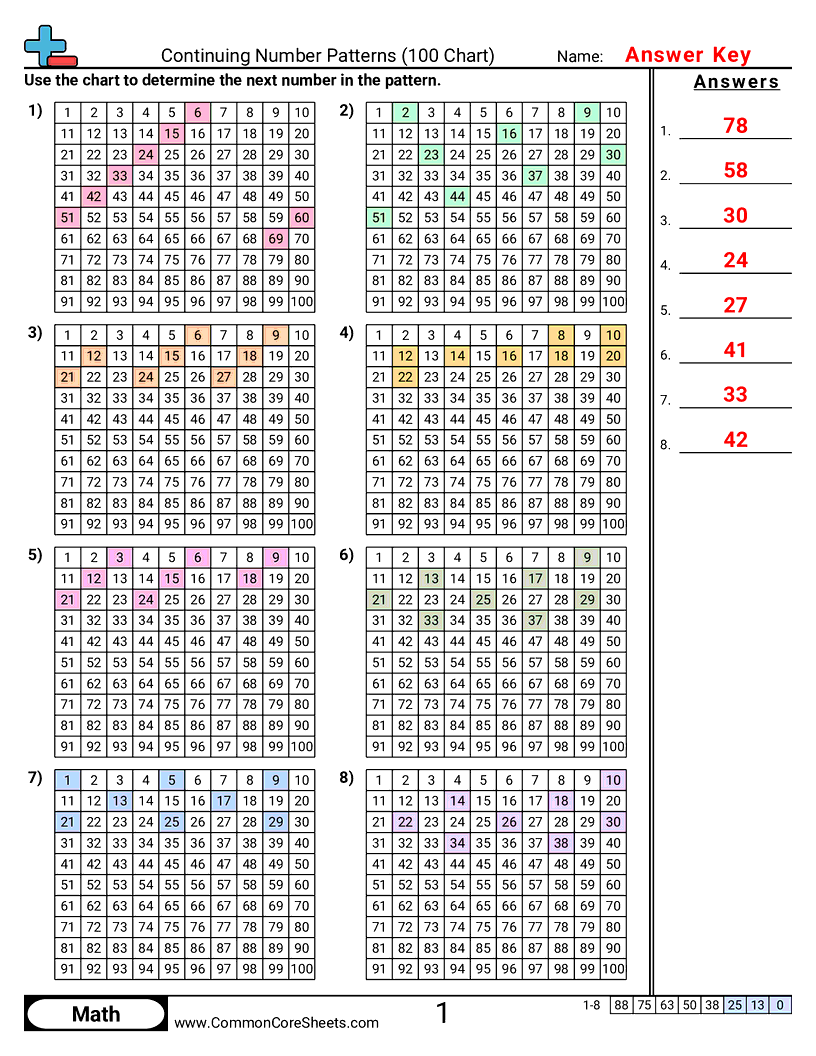
Students practice continuing number patterns by identifying the rule and predicting what comes next. Worksheets include patterns that increase or decrease by a constant amount, finding missing numbers in sequences, choosing the correct pattern from multiple options, and using a 100 chart to spot patterns. Aligned with fourth grade.
4oa5
- Figure out the rule in a number pattern that goes up or down by the same amount each step.
- Choose the next number that correctly continues an addition or subtraction pattern.
- Spot when a number does not fit the pattern and pick the option that does.
- Find the missing number in a sequence by spotting what changes each step.
- Figure out whether a pattern is using addition, subtraction, multiplication, or division.
- Use the pattern rule to keep the sequence going and check that it stays consistent.
- Figure out whether a number pattern is going up by adding or going down by subtracting.
- Use the change between numbers to identify the rule in a sequence.
- Choose which rule matches a given pattern when there are several options.
- Use a 100 chart to find the next number in a counting pattern.
- Spot patterns that move across rows or down columns on a number grid.
- Explain the rule of a pattern by noticing how the numbers change each step.
Continuing Visual Patterns
Link
About these worksheets
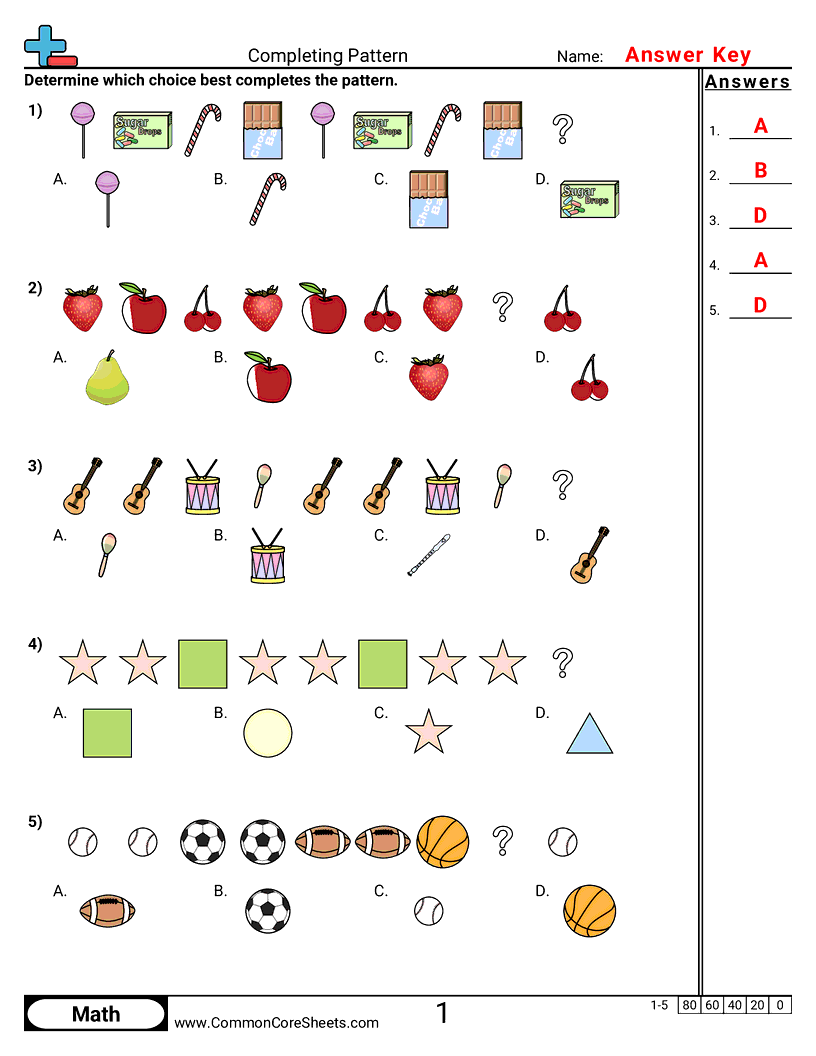
These worksheets ask students to identify the missing element in a visual repeating pattern. Students analyze shapes, colors, or pictures that follow a predictable sequence and determine which item completes the pattern. This builds logical reasoning and observation skills.
- Figure out which shape or picture comes next in a repeating pattern.
- Find the missing picture in the middle of a visual sequence.
- Use the pattern rule to choose the correct answer from a set of options.
Identifying Functions
Link
About these worksheets
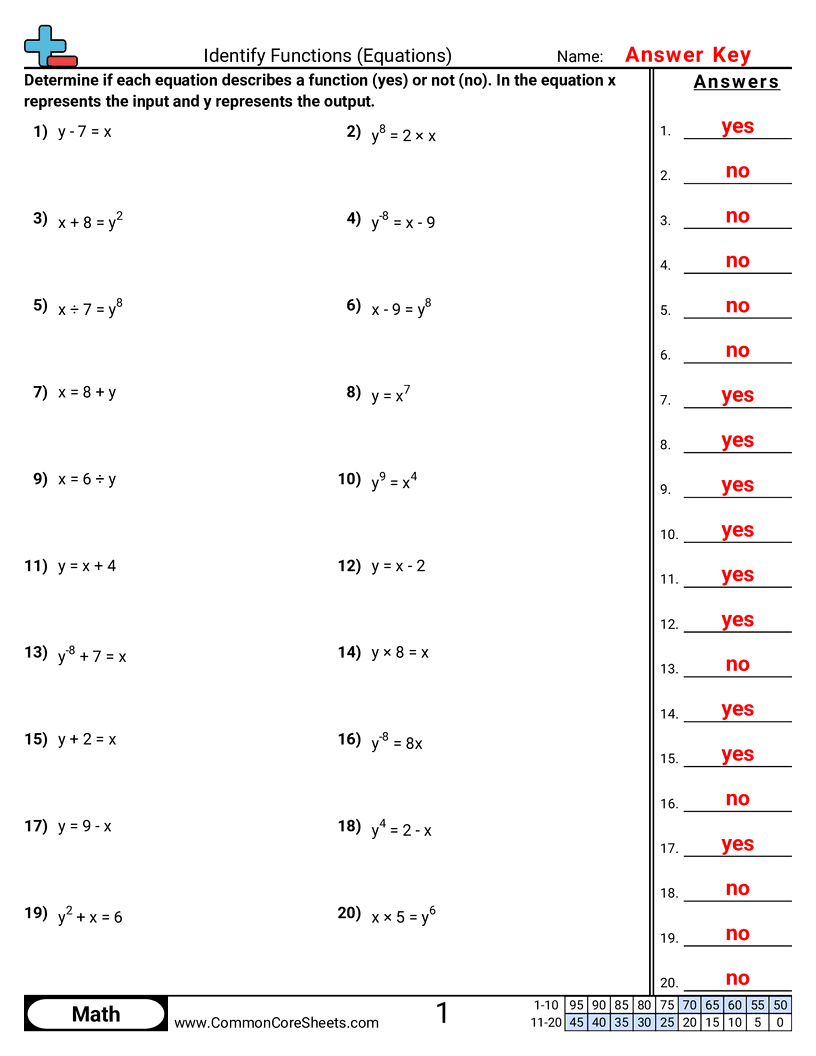
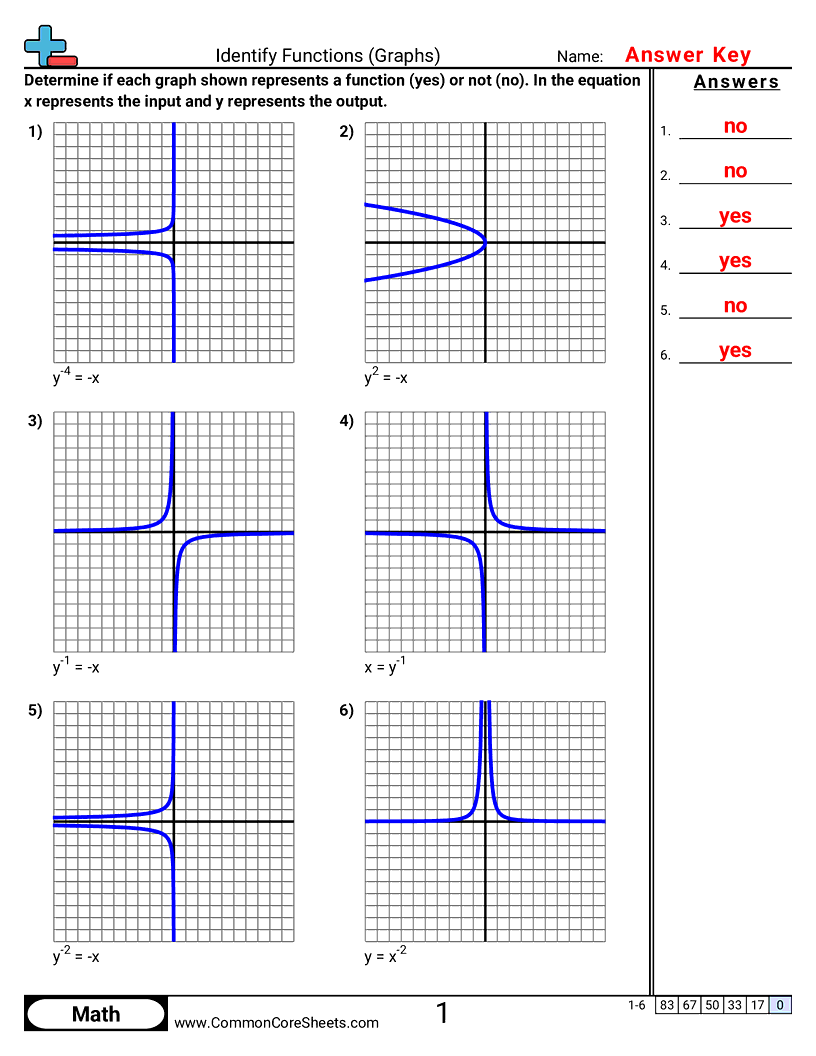
Students learn to identify whether a relationship is a function using equations, graphs, and tables. Activities include applying the vertical line test to graphs, checking if each input has exactly one output in tables, finding points that belong to a given function, and matching function equations to tables. Aligned with eighth grade standards.
8f1
- Decide whether an equation is a function by checking if each input has exactly one output.
- Tell the difference between a function and a non-function when equations have x and y variables.
8f1
- Decide whether a graph represents a function by checking if each x-value matches only one y-value.
- Use the vertical line test to spot graphs that are not functions.
- Identify repeated x-values on a graph and explain why that breaks the function rule.
8f1
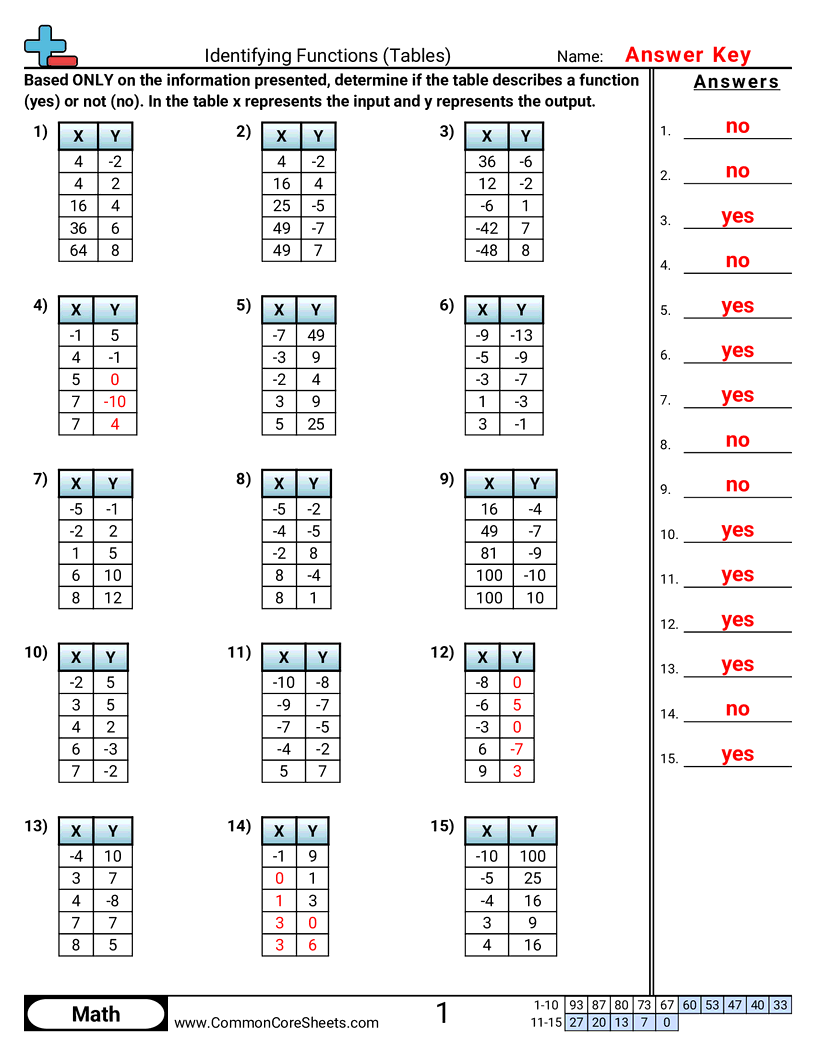
- Decide whether an input-output table is a function by checking if each input has exactly one output.
- Spot when a table is not a function because the same input is paired with different outputs.
8f1
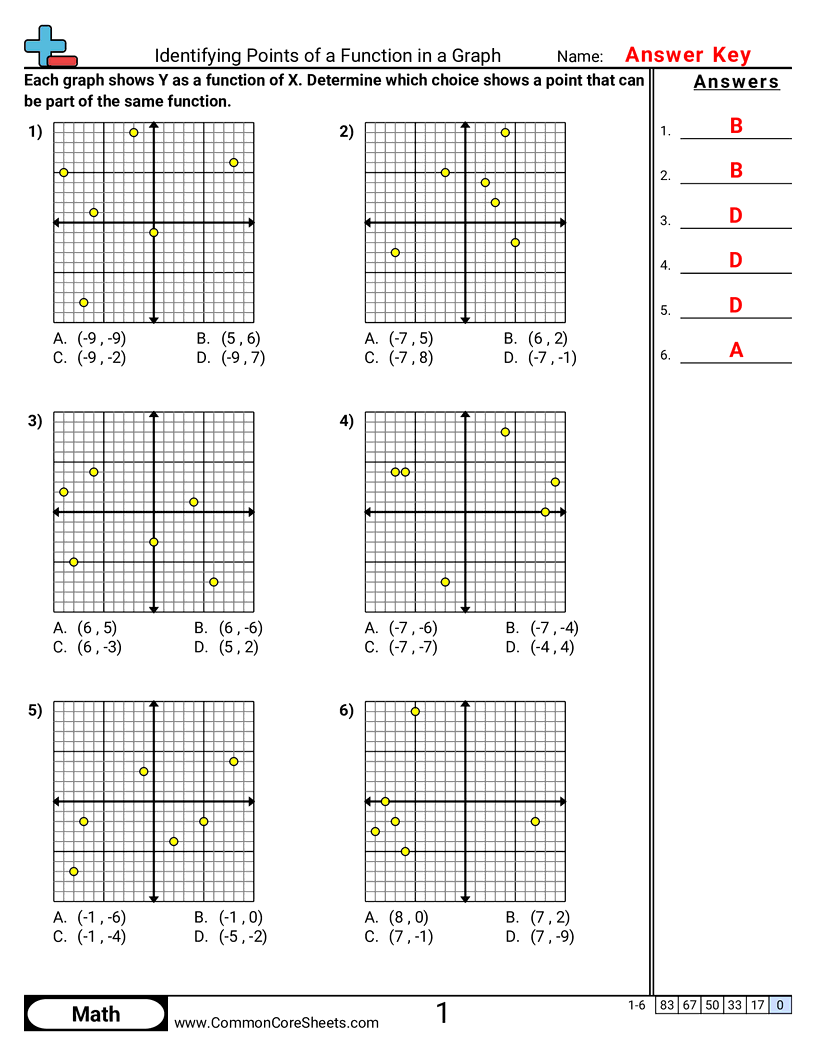
- Decide whether a given point could be on the same function shown in a graph.
- Connect a point on a graph to an input-output pair for the function.
8f1
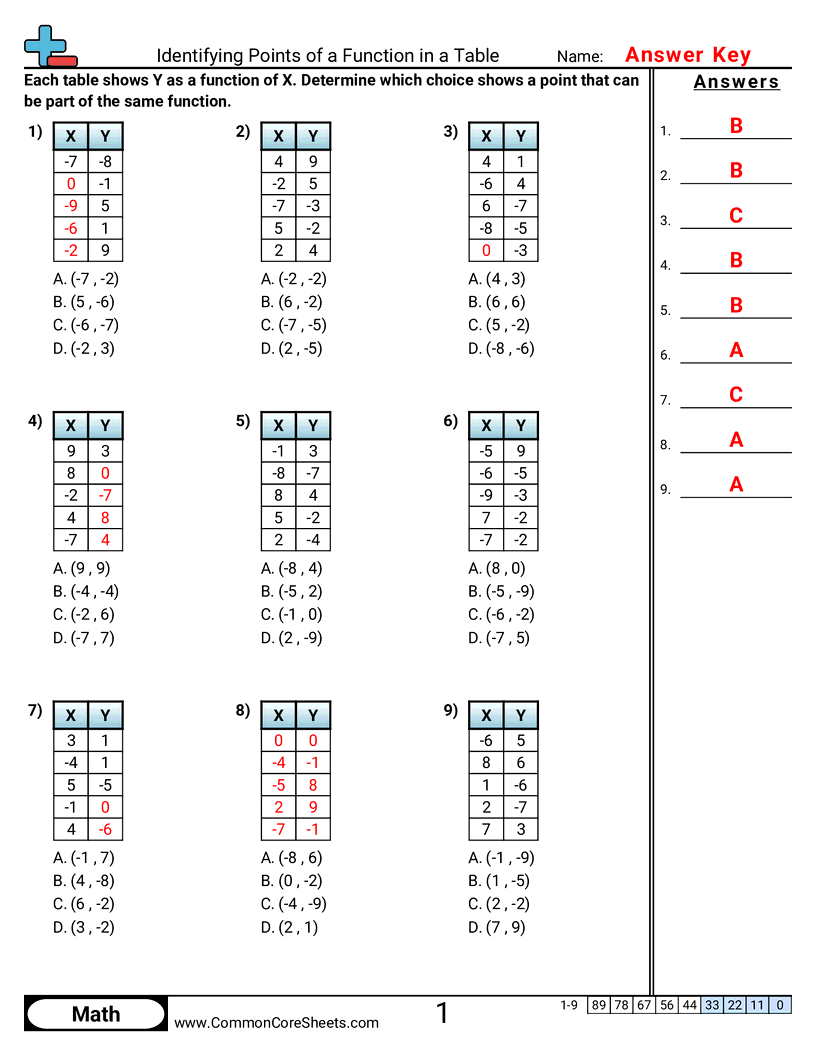
- Decide whether a given point could belong to the same function shown in the table.
8f1
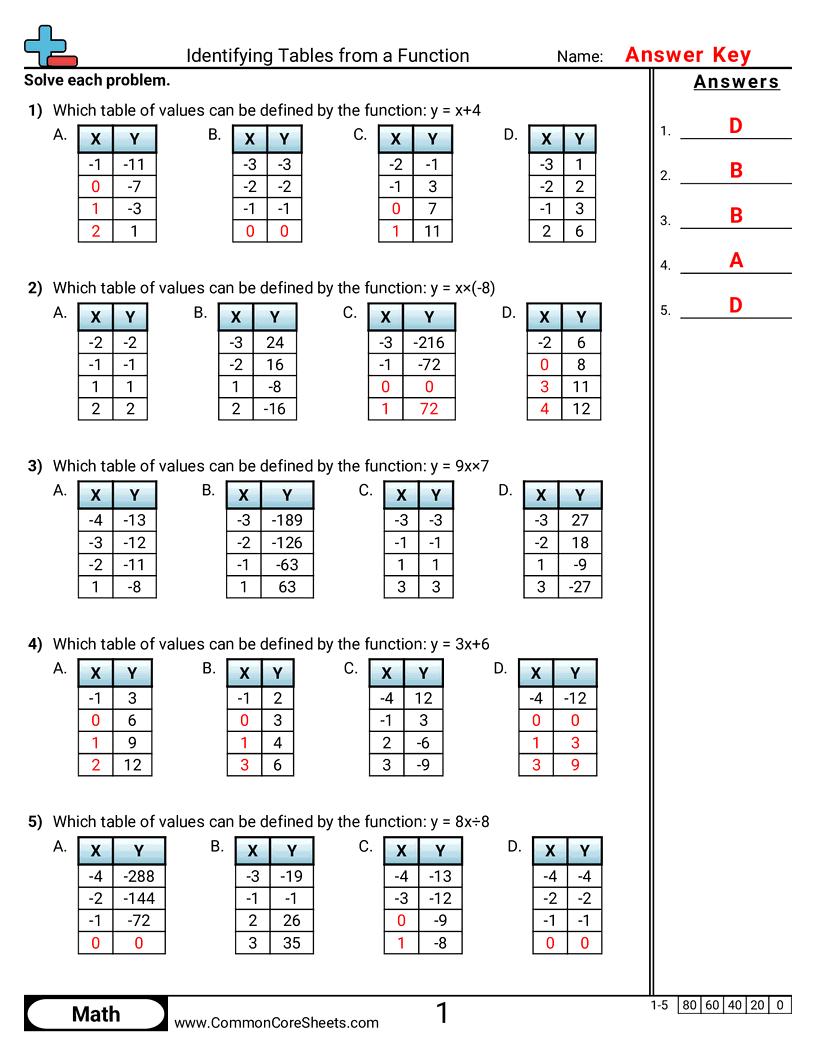
- Practice matching a function equation to the correct table of x and y values
- Plug x values into a given equation to check if the y values in each table are correct
- Work with different types of functions including addition, multiplication, and combinations of both