Properties Worksheets
Free properties worksheets with answer key. No login or account needed. We have a fantastic selection of free properties worksheets that cover all the important concepts such as Commutative Property Of Addition, Identity Property Of Addition, Associative Property Of Multiplication, Commutative Property Of Multiplication, Distributive Property Of Multiplication and Identity Property Of Multiplication.. A grading column and quick grade scale maker grading a breeze and a modified pages help with lower level learners or when just introducing a topic. Great for teachers or for homeschool.
Browse Sheets By Problem Type
×
Commutative Property of Addition
Link
About these worksheets
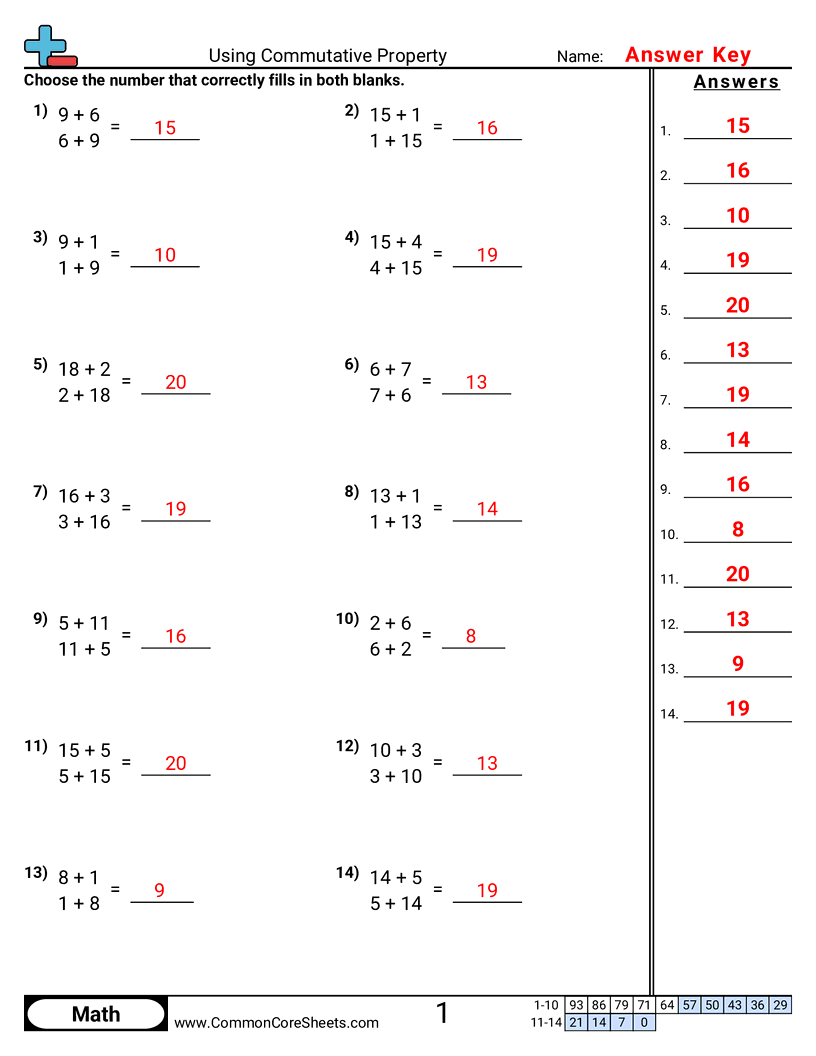
These worksheets demonstrate the commutative property of addition — the principle that changing the order of addends does not change the sum. Students fill in missing values to show that two addition equations with swapped addends produce the same result. Aligned with first grade standards.
1oa3


- See that switching the order of two addends gives the same sum.
- Fill in the missing addend to make two addition equations equal.
Identity Property of Addition
Link
About these worksheets
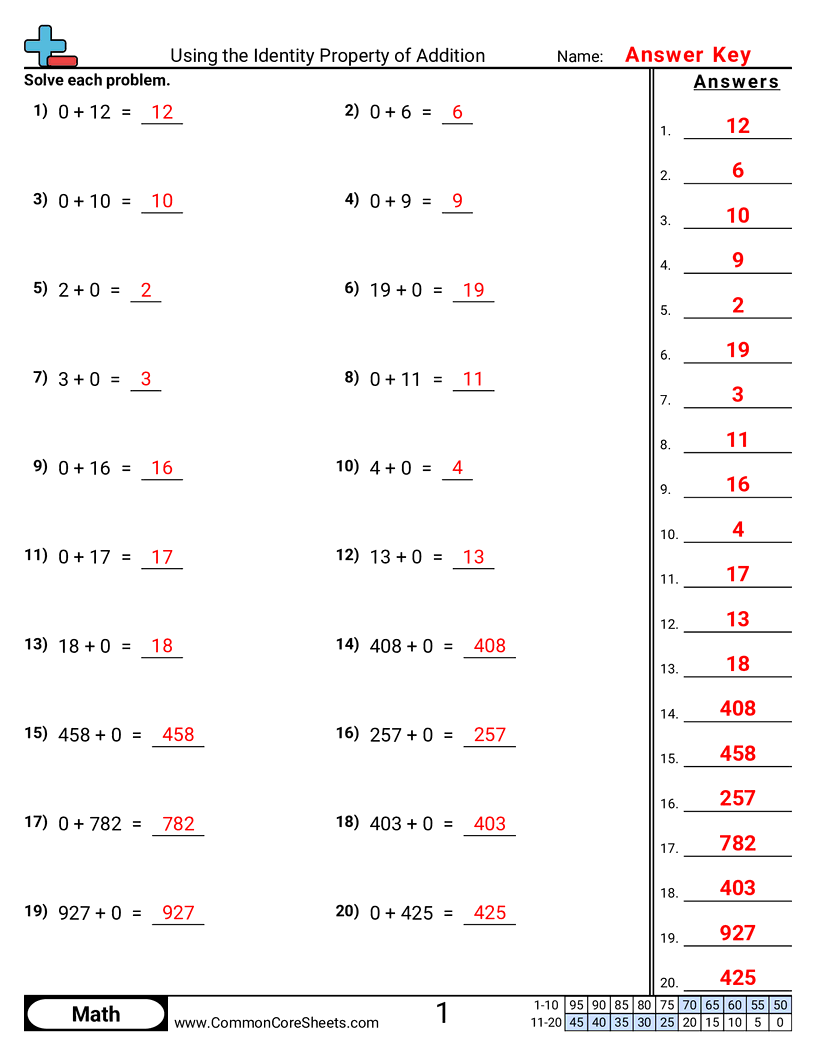
Students explore the identity property of addition, which states that adding zero to any number leaves the number unchanged. These worksheets provide practice recognizing and applying this property in addition equations.
- Learn that adding 0 to a number keeps the number the same.
- Solve addition equations that include 0 without changing the other addend.
- Spot when a sum should stay unchanged because 0 is being added.
- Use the identity property of addition to quickly verify simple addition statements.
Associative Property of Multiplication
Link
About these worksheets
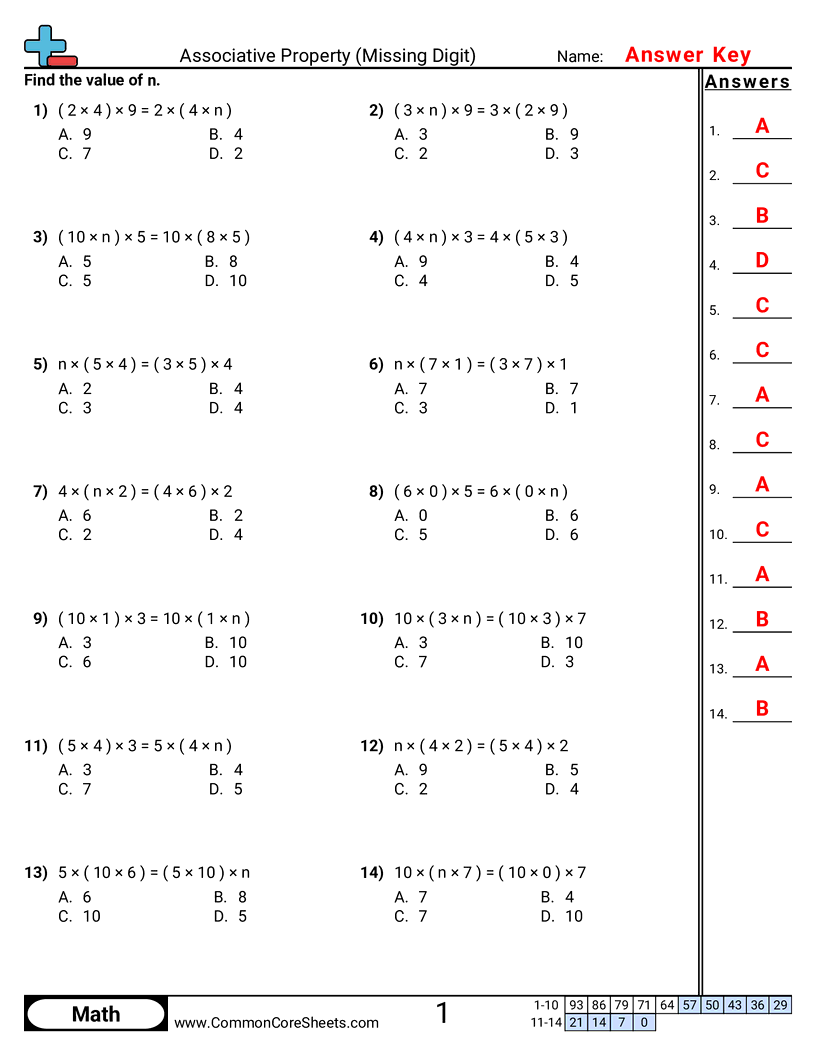
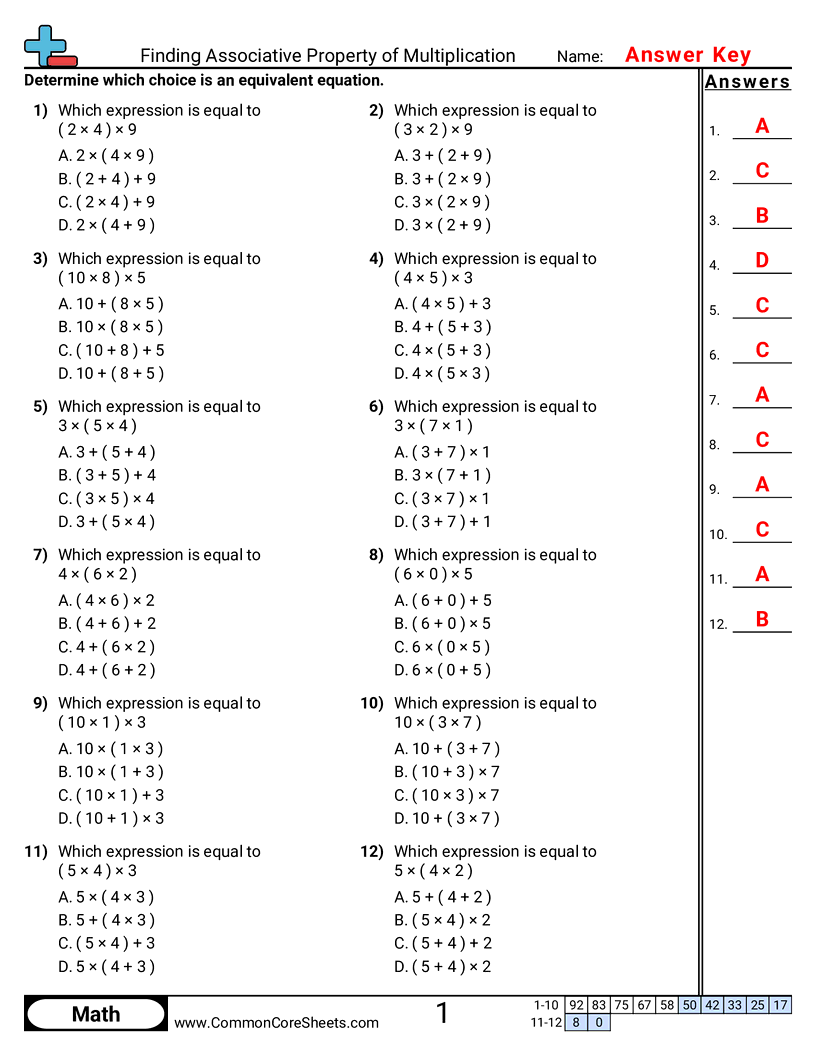
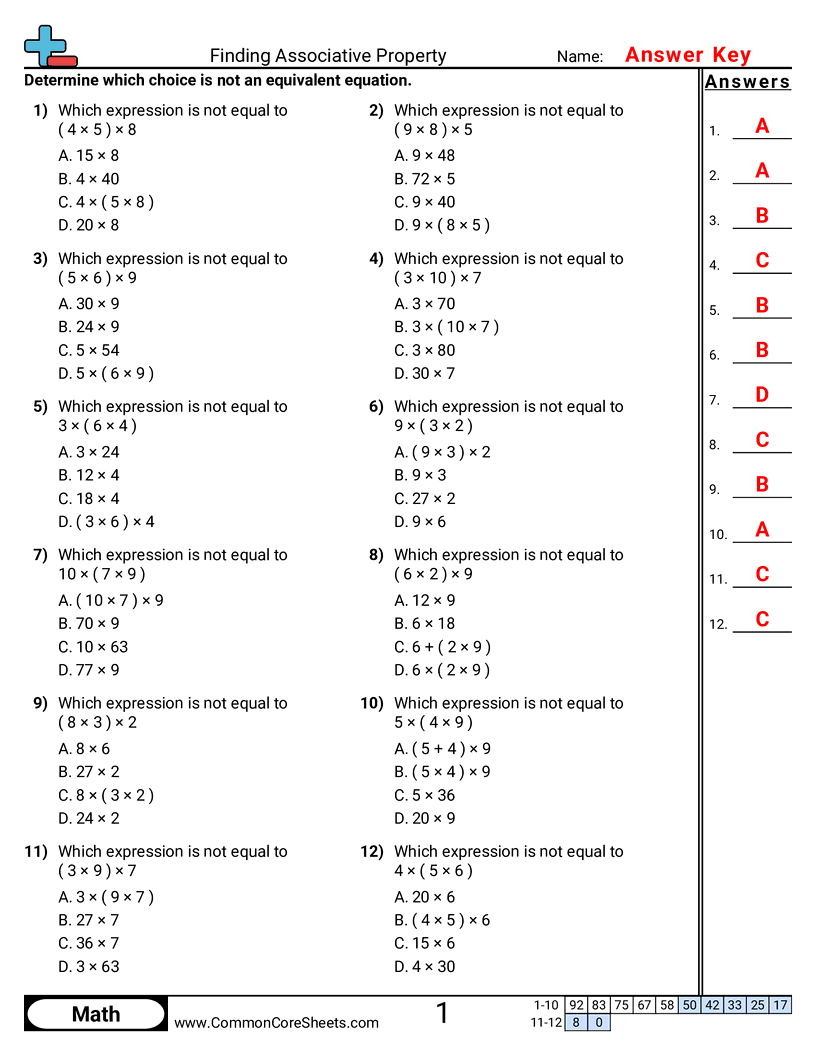
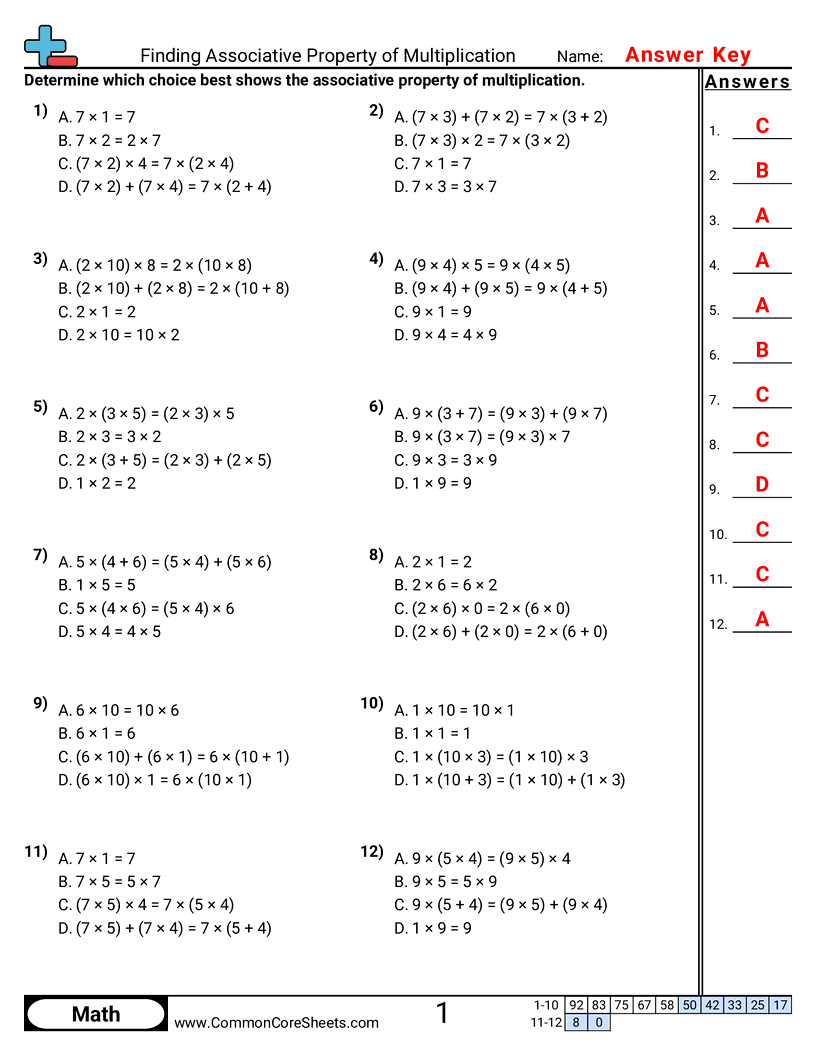
These worksheets help students understand the associative property of multiplication — that changing the grouping of factors does not change the product. Activities include finding missing digits, matching equivalent grouped expressions, and identifying the property in multiple-choice formats. Aligned with third grade standards.
3oa5
- Find the missing number that makes a multiplication equation true.
- Rewrite a multiplication problem by regrouping the factors without changing the product.
- Explain why changing the grouping in multiplication does not change the answer.
3oa5
- Practice using parentheses to see how numbers can be grouped in a multiplication equation.
- Find the missing digit that makes two grouped multiplication expressions equal.
3oa5
- Recognize that changing how factors are grouped in a multiplication problem does not change the product.
- Rewrite multiplication expressions using parentheses to show a different grouping of the same factors.
- Decide which rewritten multiplication sentence matches the original problem.
3oa5
- Practice rewriting multiplication or addition problems by changing the grouping with parentheses.
- Recognize when two expressions are equivalent even if the numbers are grouped differently.
- Use the associative property to match an expression to another expression with the same value.
- Check that regrouping does not change the product or sum.
3oa5
- Recognize when a multiplication equation is using the associative property by changing how the factors are grouped.
Commutative Property of Multiplication
Link
About these worksheets
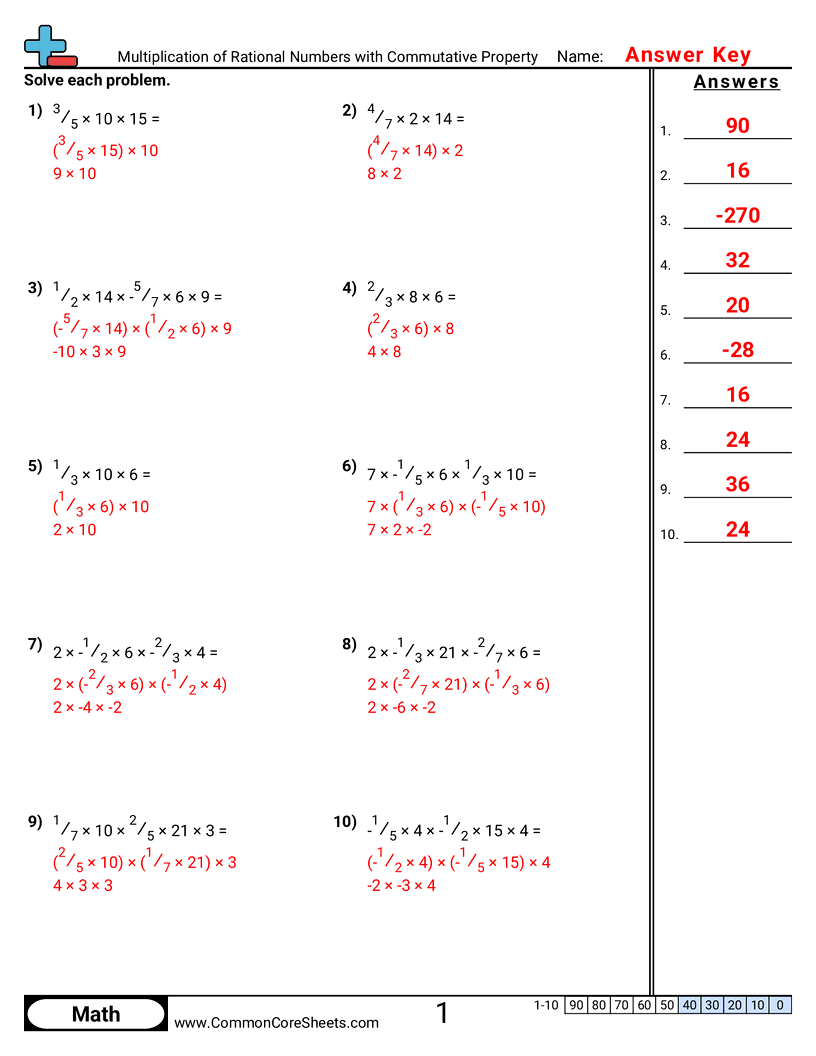
Students practice the commutative property of multiplication, learning that the order of factors does not affect the product. Worksheets include identifying the property in equations and applying it to multiply rational numbers including fractions, decimals, and integers. Spanning third through seventh grade.
3oa5
- Recognize that switching the order of factors does not change the product.
- Decide whether a multiplication statement shows the commutative property or not.
7ns2c
- Practice multiplying rational numbers like fractions, decimals, and integers.
- Use the commutative property to switch the order of factors without changing the product.
- Choose an easier order to multiply, such as pairing numbers that make a whole number.
Distributive Property of Multiplication
Link
About these worksheets
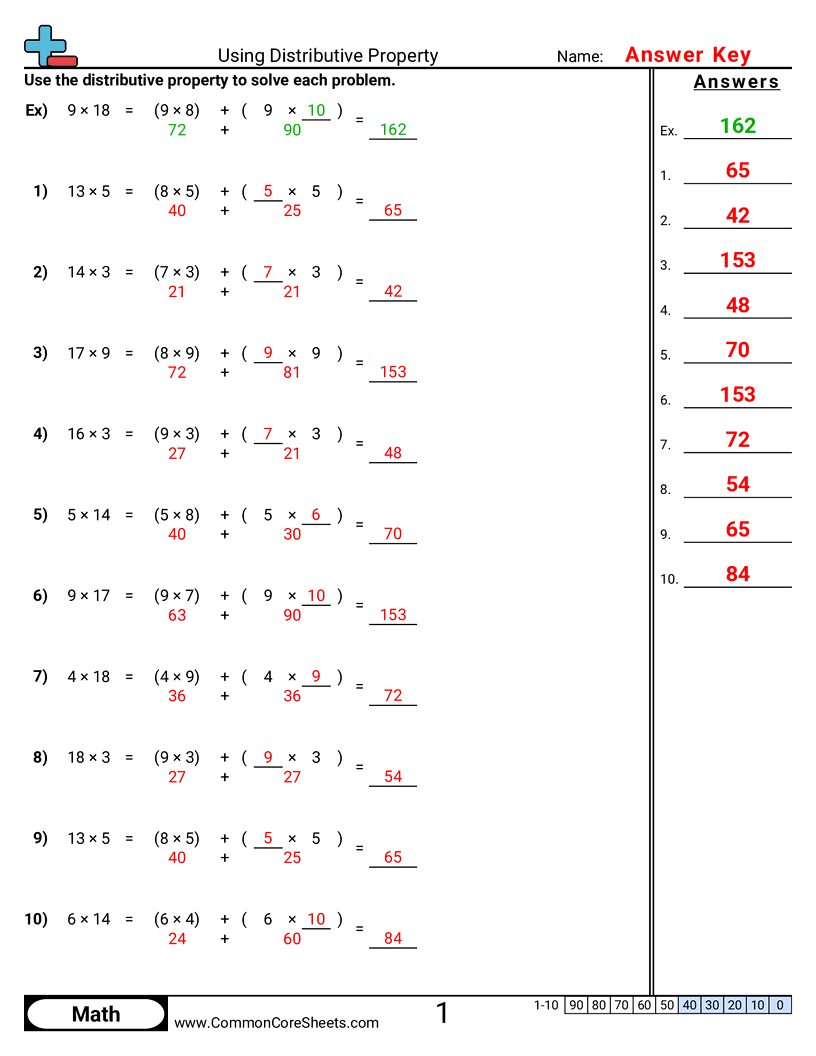
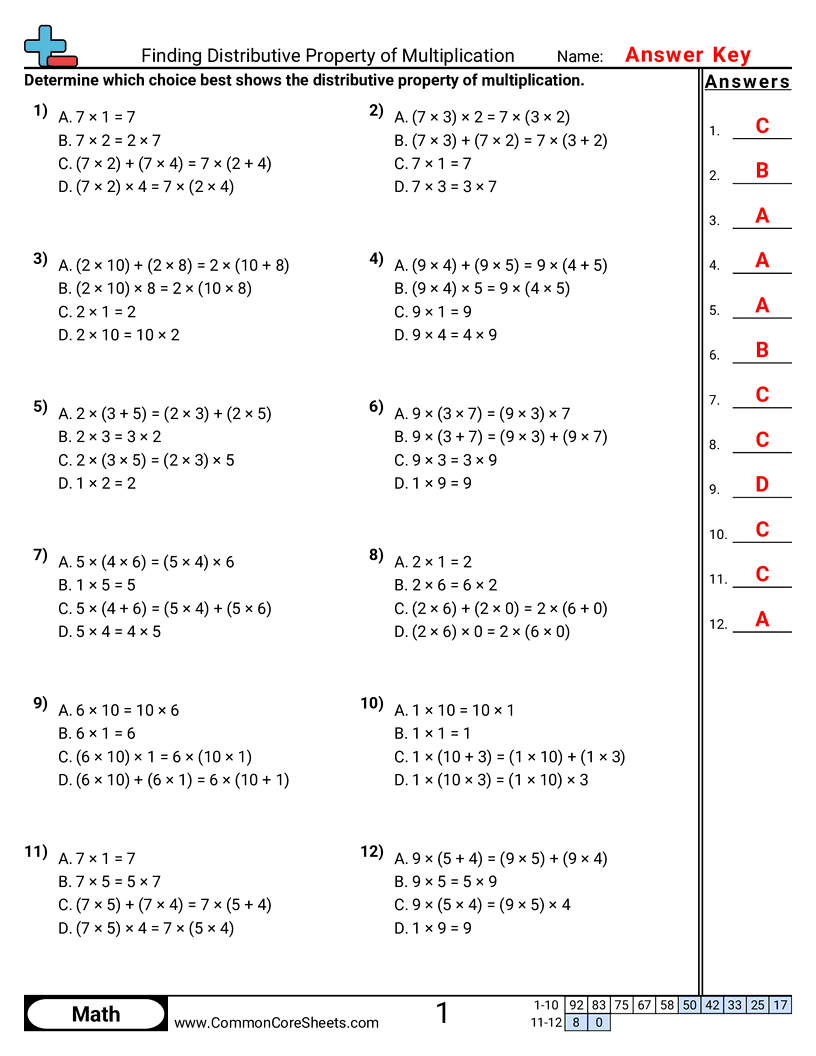
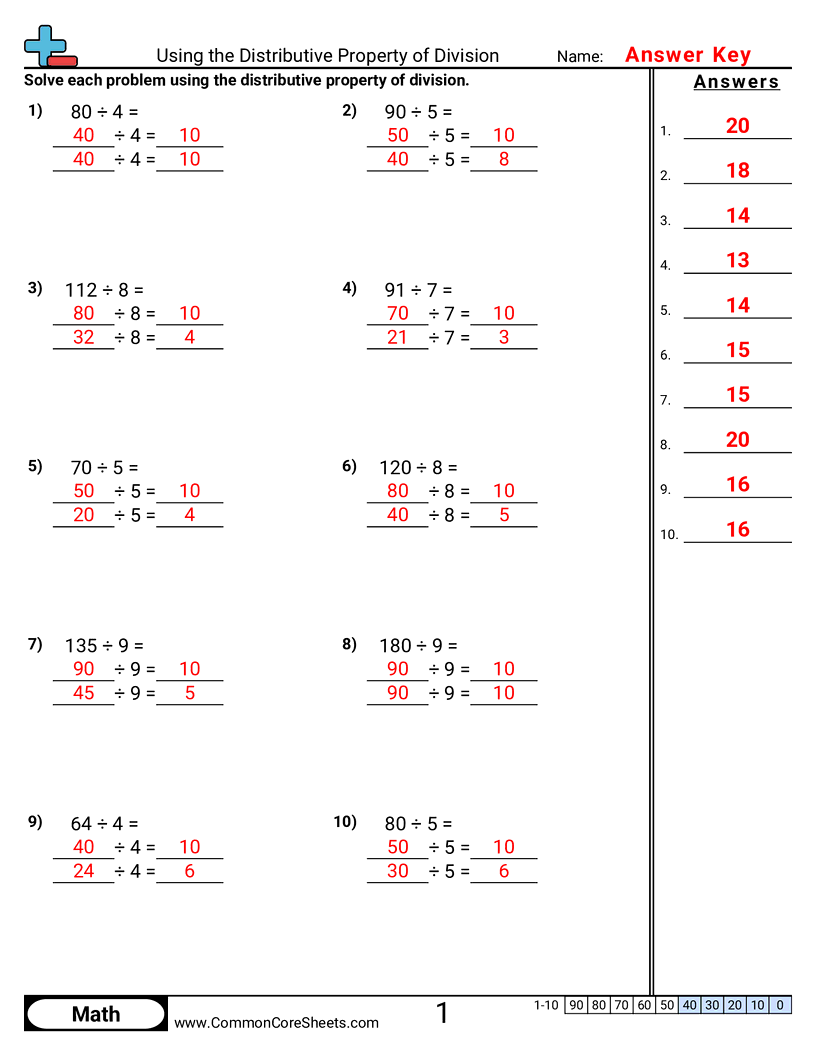
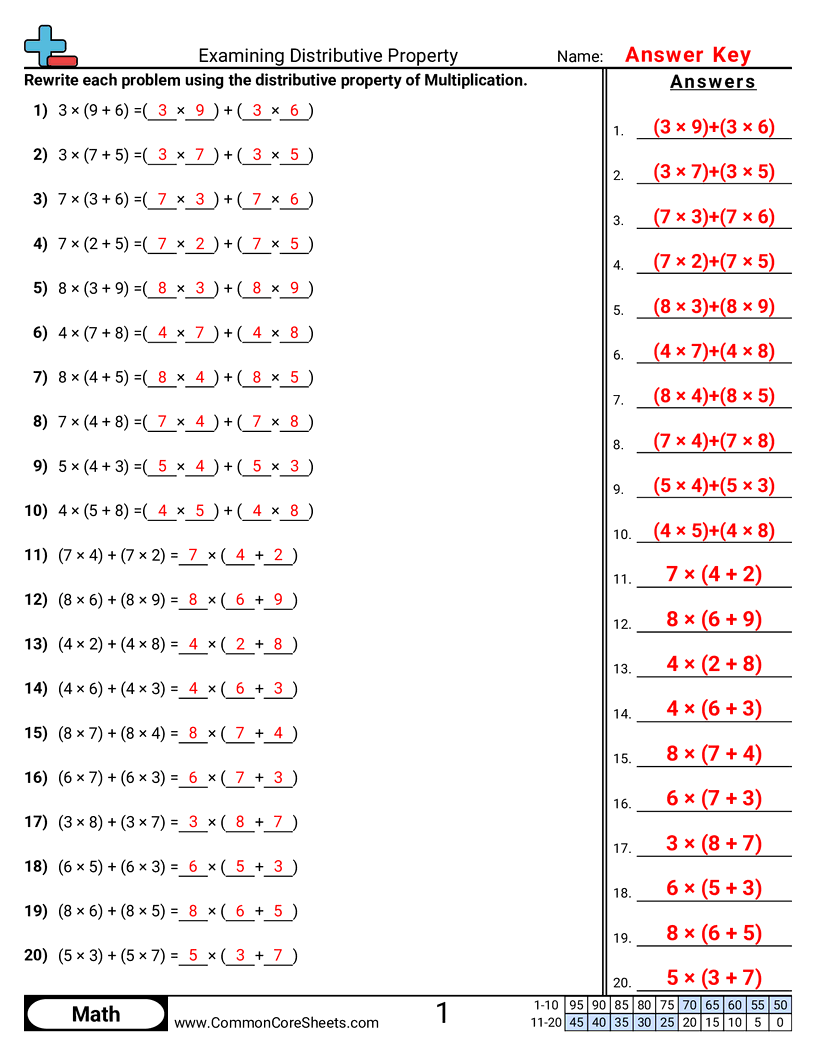
These worksheets cover the distributive property of multiplication in depth. Students practice breaking apart multiplication problems, expanding expressions with parentheses, identifying the property in multiple-choice problems, and applying it to both multiplication and division with arrays. Activities also include examining and solving distributive property equations. Aligned with third grade standards and beyond.
3oa5
- Practice rewriting a multiplication problem by breaking one factor into a sum inside parentheses.
- Use the distributive property to expand expressions like a(b + c) into a×b + a×c.
- Solve multiplication problems by distributing and then adding the partial products.
- Match an expression with parentheses to an equivalent expanded expression.
3oa5
- Recognize when a multiplication expression is being broken apart using the distributive property.
- Check whether two multiplication expressions are equivalent by thinking about how the factors are grouped.
- Practice rewriting multiplication with parentheses by distributing to each term inside.
- Learn to expand an expression into an equivalent sum before solving.
- Solve expressions after distributing by multiplying and then adding the results.
- Break a division problem into easier parts using the distributive property.
- Use an array model to show how a large group can be split into equal rows or groups.
- Combine the partial quotients from the broken-apart parts to get the final quotient.
- Rewrite a division expression as the sum or difference of two simpler divisions.
- Use known facts (like dividing by 10, 5, or 2) to solve harder quotients.
- Combine the partial quotients to get the final answer.
- Practice using the distributive property to multiply by breaking a number into easier parts.
- Expand expressions with parentheses into an equivalent addition expression.
- Check that two different forms (expanded and factored) give the same product.
Identity Property of Multiplication
Link
About these worksheets
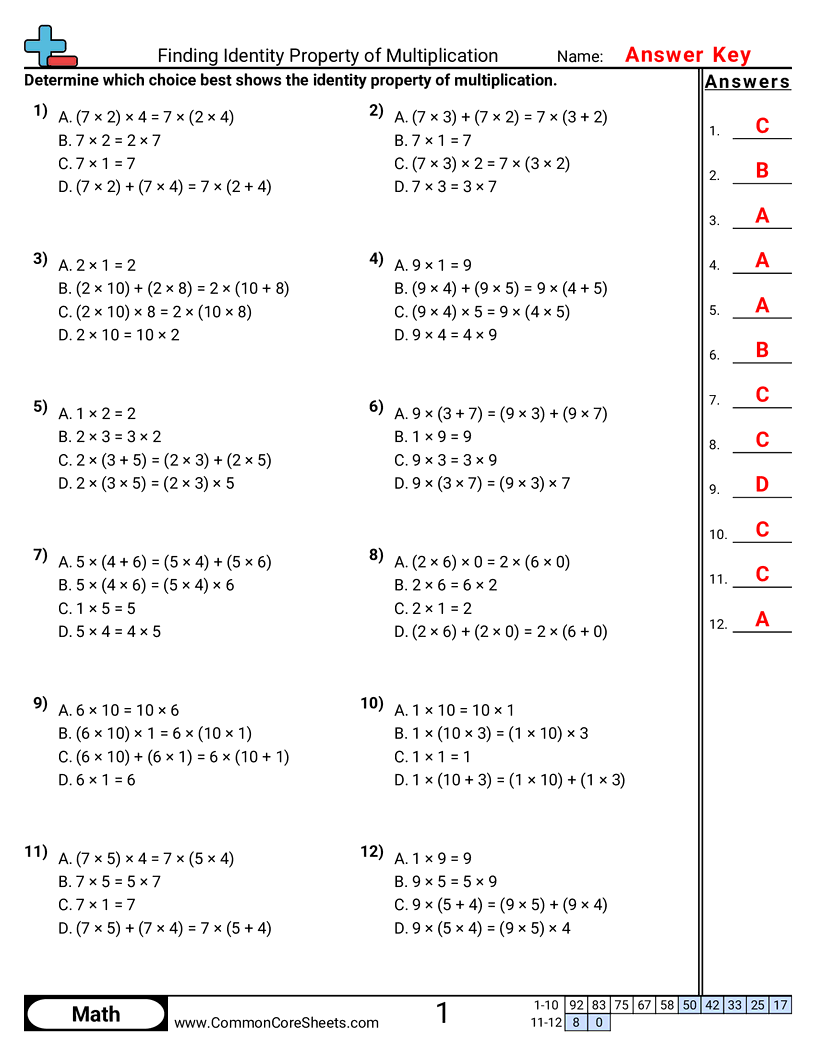
Students learn the identity property of multiplication — that multiplying any number by one keeps the number the same. These multiple-choice worksheets help students recognize and apply this fundamental property. Aligned with third grade standards.
3oa5
- Recognize that multiplying any number by 1 keeps the number the same.
- Decide which multiplication statement shows the identity property of multiplication.
All Properties of Multiplication
Link
About these worksheets
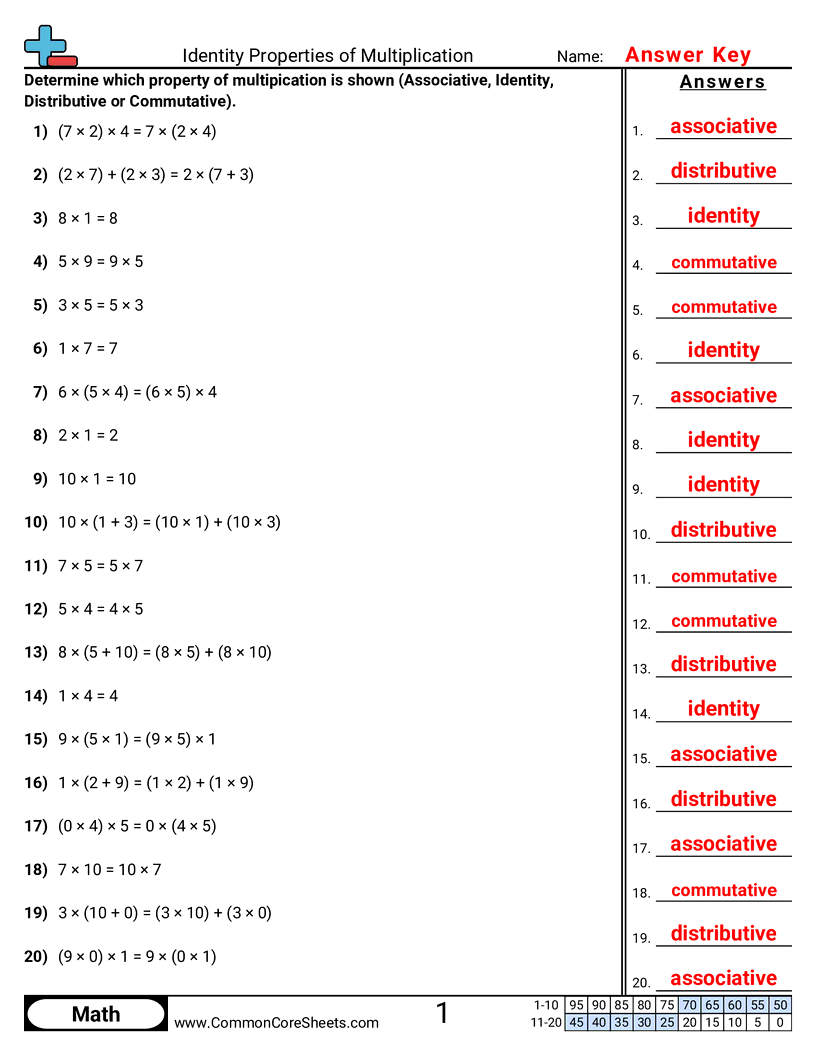
These worksheets combine all four properties of multiplication — commutative, associative, distributive, and identity — in a single practice set. Students identify which property is being used in each equation, building the ability to recognize and distinguish between the properties. Aligned with third grade standards.
3oa5
- Recognize which multiplication property is being used in an equation (commutative, associative, distributive, or identity).
About these worksheets
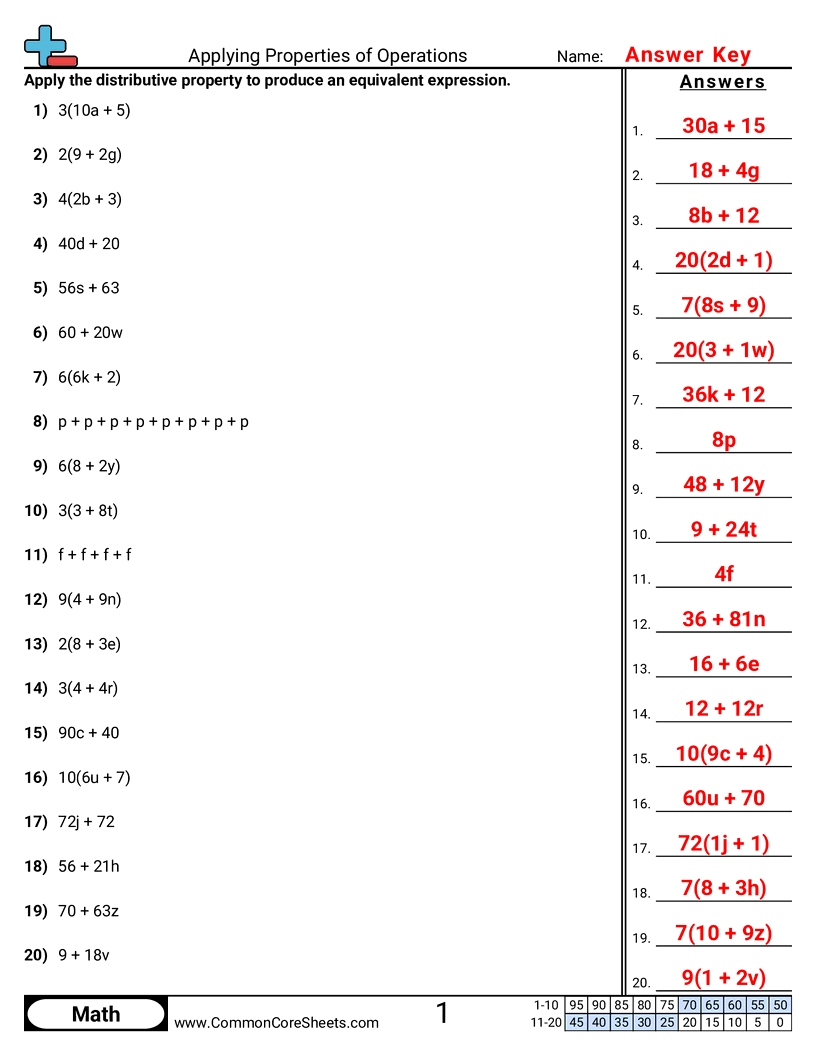
Students apply properties of operations to generate equivalent equations. These worksheets require students to rewrite expressions using the commutative, associative, and distributive properties, strengthening their understanding of algebraic equivalence. Aligned with sixth grade standards.
6ee3
- Rewrite equations in a different but equal form by using math properties.
- Use the commutative and associative properties to reorder or regroup numbers without changing the value.
- Use the distributive property to expand or factor expressions to make them easier to work with.