3g1 Worksheets
Geometry
Reason with shapes and their attributes.
1Understand that shapes in different categories (e.g., rhombuses, rectangles, and others) may share attributes (e.g., having four sides], and that the shared attributes can define a larger category (e.g., quadrilaterals). Recognize rhombuses, rectangles, and squares as examples of quadrilaterals, and draw examples of quadrilaterals that do not belong to any of these subcategories.
3g1
3g1

- Count the sides and corners (vertices) of a polygon to figure out what it is.
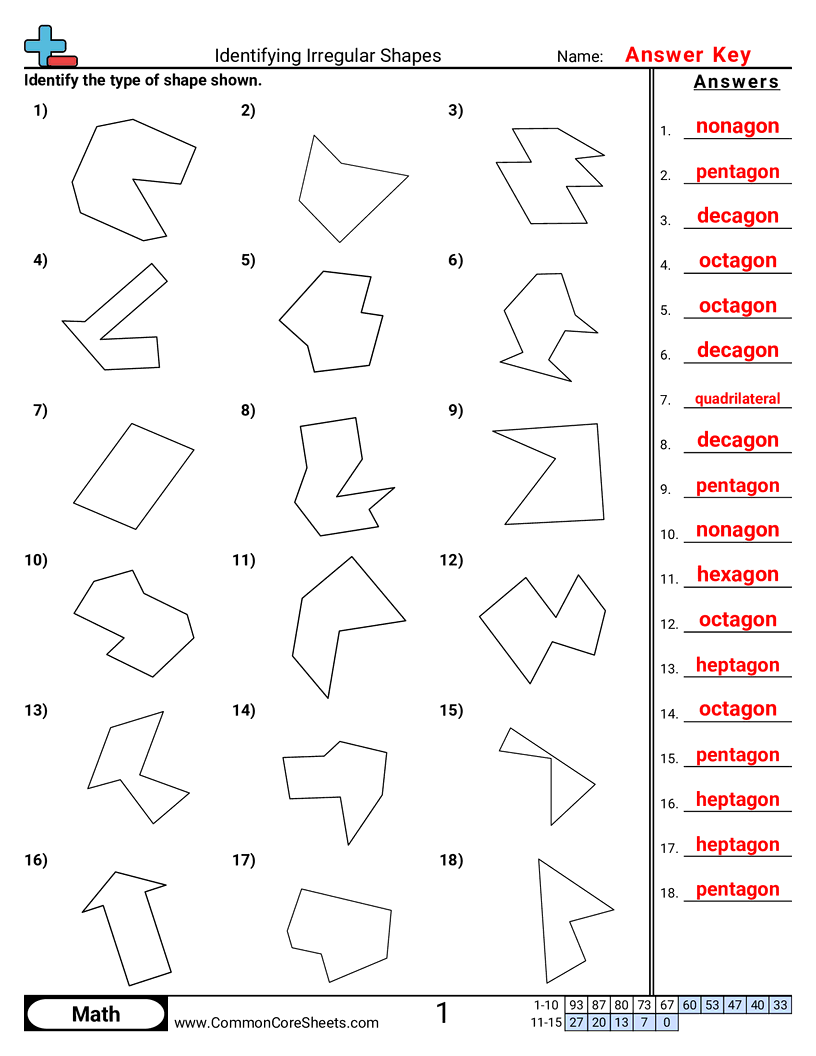
- Name irregular polygons as quadrilaterals, pentagons, hexagons, heptagons, octagons, nonagons, or decagons.
- Use shape clues like sides, angles, and vertices to choose the correct polygon name.
3g1

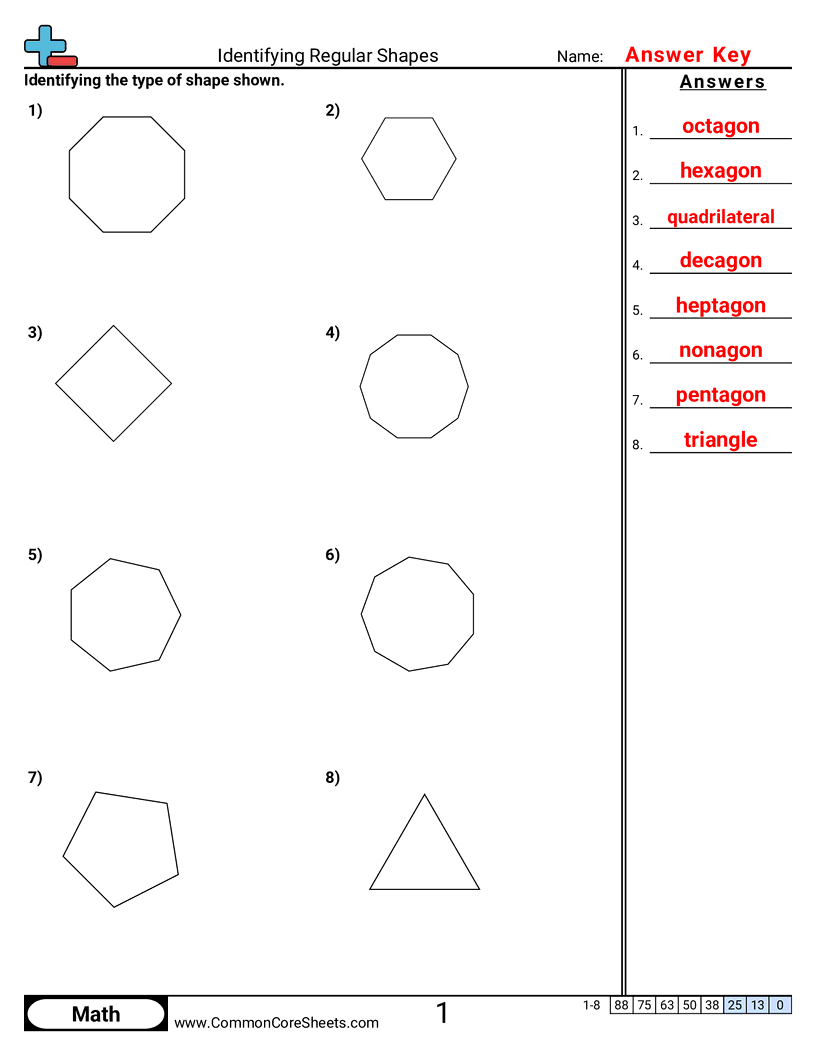
- Name a regular polygon by counting its sides (triangle through decagon).
- Use the words triangle, quadrilateral, pentagon, hexagon, heptagon, octagon, nonagon, and decagon correctly.
- Tell that a shape is regular by noticing its equal sides and equal angles.
- Count sides and vertices carefully to avoid mixing up similar-looking polygons.
3g1

- Decide whether a polygon is regular or irregular by checking if all sides and angles match.
- Spot shapes that look similar but are irregular because one side or angle is different.
- Use words like side, angle, and vertex to describe why a shape is regular or irregular.
- Compare different polygons and sort them into regular and irregular groups.
3g1

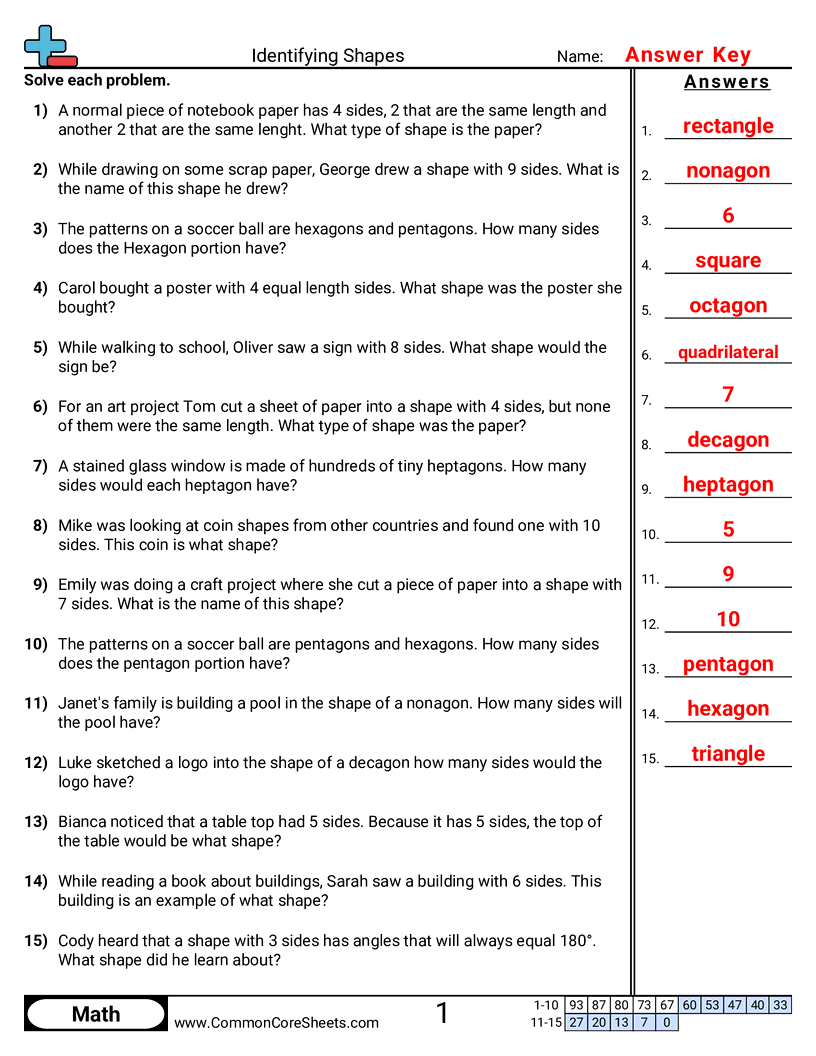
- Identify common polygons by name when you read a short word problem.
- Count and match the number of sides to the correct shape.
- Use shape clues in a sentence (like “has 8 sides”) to choose the right polygon.