4nf6 Worksheets
Number and Operations—Fractions
6 Use decimal notation for fractions with denominators 10 or 100. For example, rewrite 0.62 as 62/100; describe a length as 0.62 meters; locate 0.62 on a number line diagram.
4nf6
4nf6
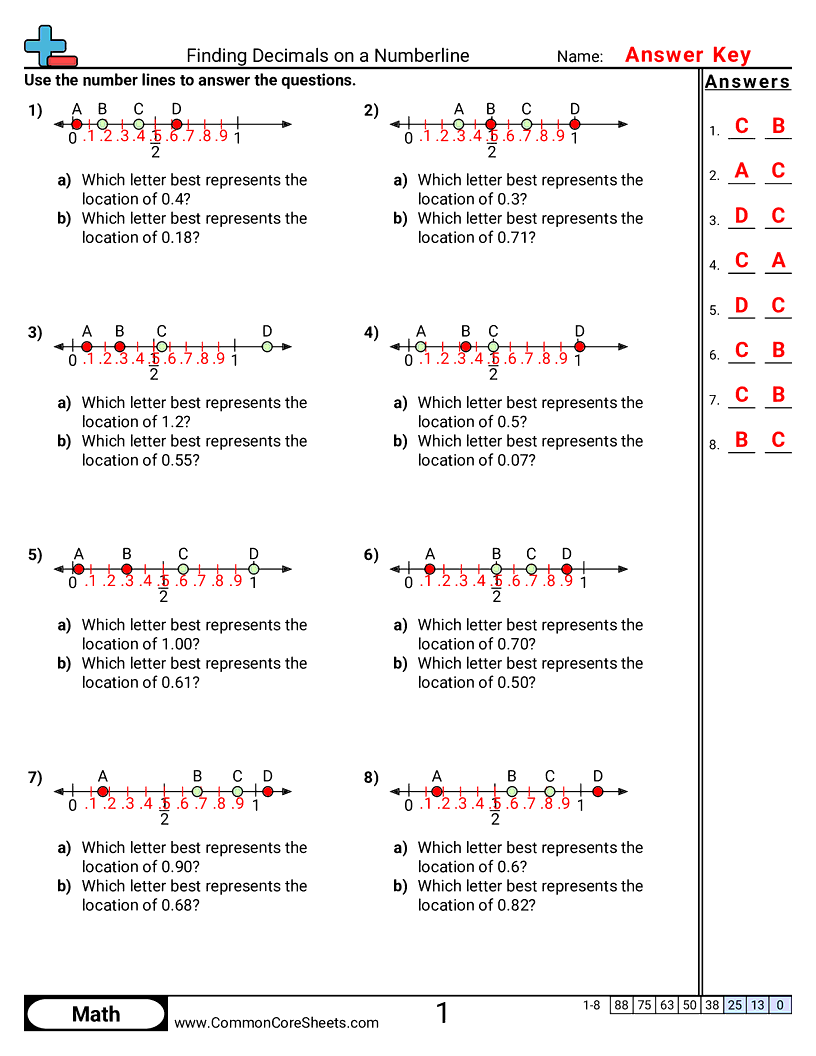
Use the whole numbers on a number line to figure out which interval a decimal belongs in. Count equal tick marks on a number line to place a decimal at the correct point.
4nf6
Decide whether a decimal number is less than, equal to, or greater than one-half (0.5). Use place value to compare decimals by looking at tenths and hundredths. Recognize different ways to write one-half, like 0.5 and 0.50, and compare other decimals to it.
4nf6
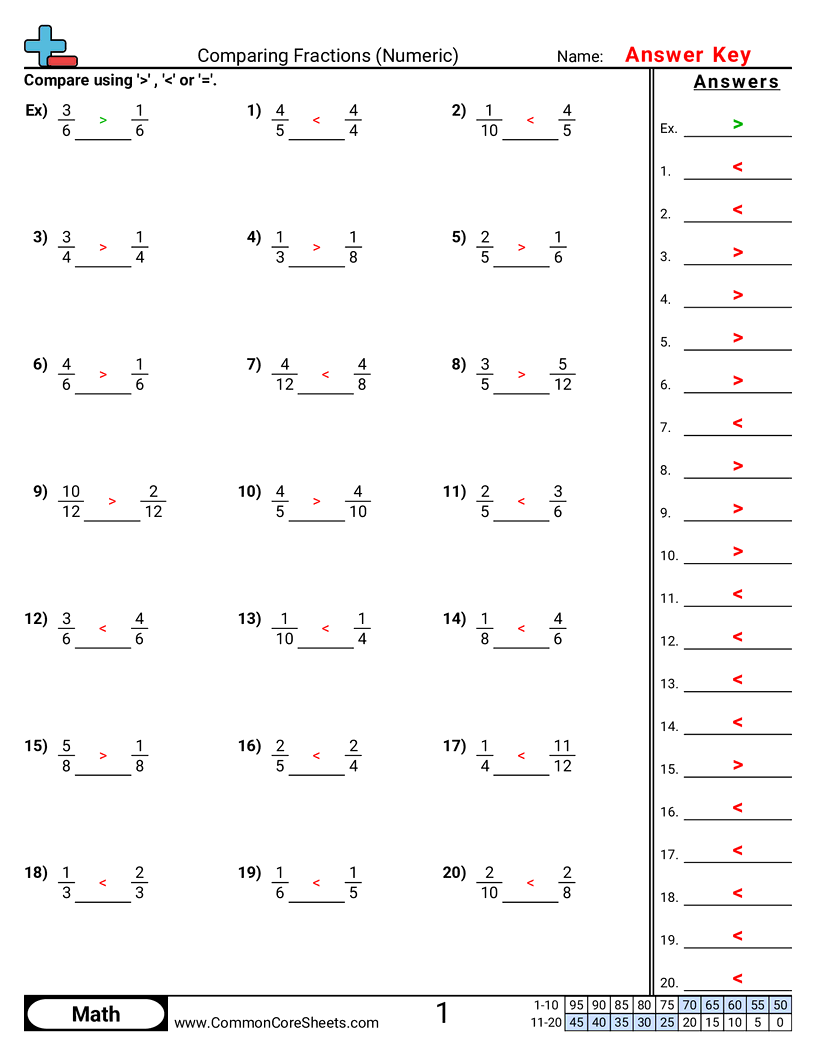
Decide which of two fractions is greater, less, or if they are equal. Compare fractions even when they have different denominators. Use equivalent fractions or common denominators to make comparisons easier.
4nf6
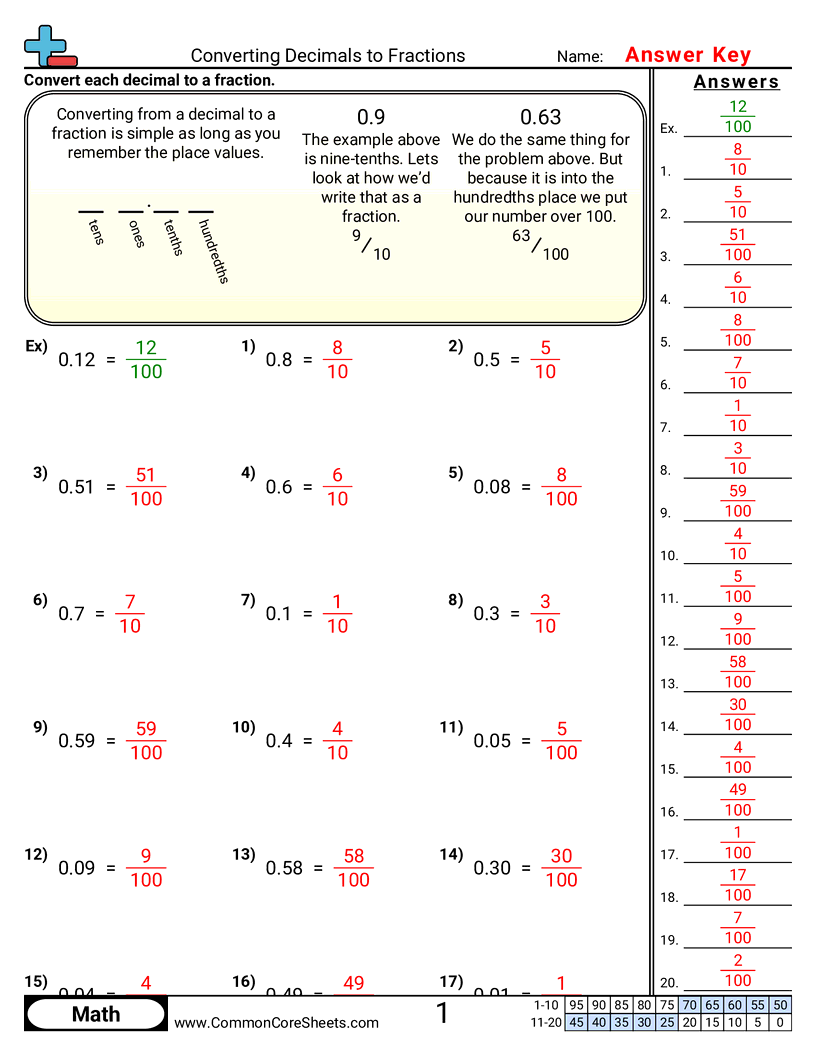
Turn a decimal into a fraction by using the place value to choose the denominator. Connect the decimal and fraction as two ways to show the same amount.
4nf6
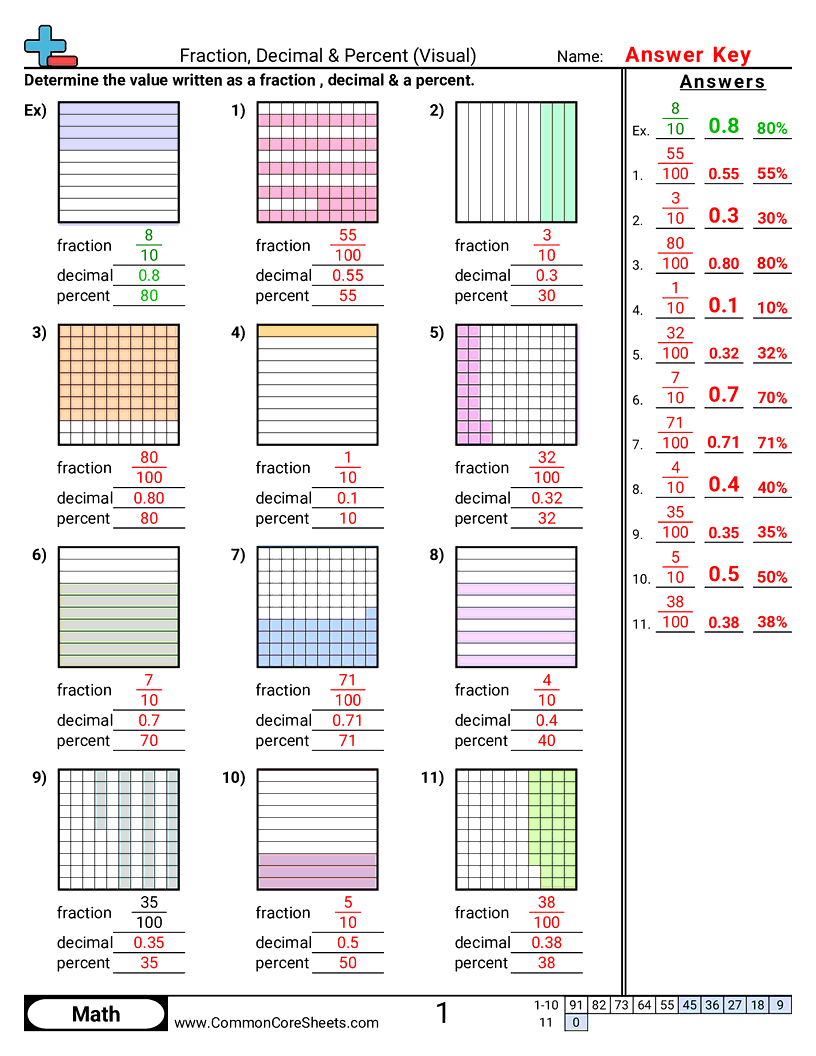
Read a shaded picture model and name the fraction that is shaded. Write the shaded amount as a decimal. Write the shaded amount as a percent. Convert between fraction, decimal, and percent to show the same amount in different ways.
4nf6
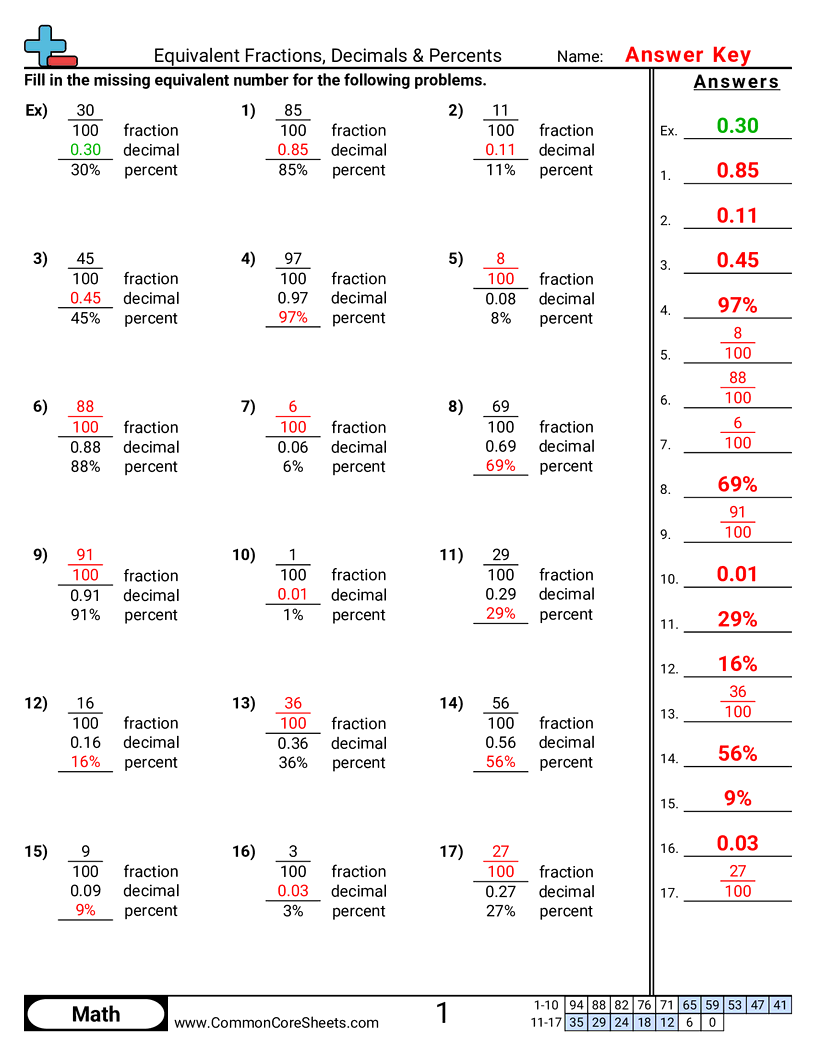
Convert between fractions, decimals, and percents that represent the same amount. Find a missing fraction, decimal, or percent by using equivalent values.
4nf6
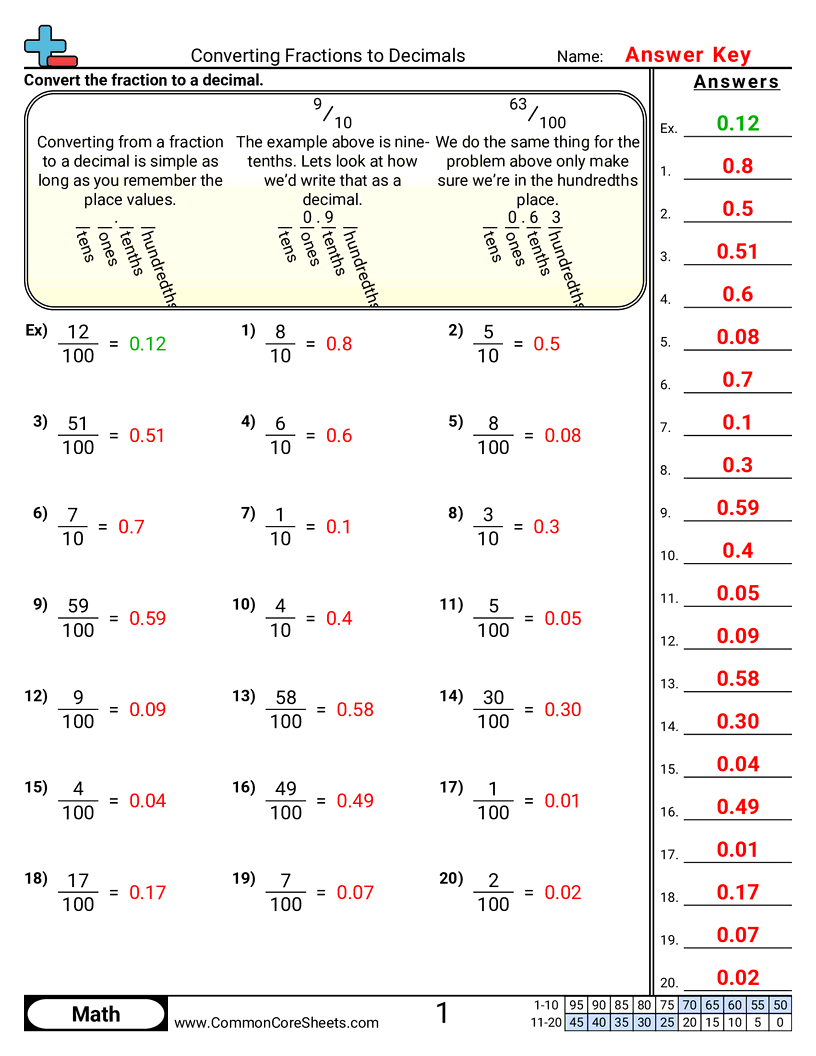
Turn a fraction into a decimal by dividing the numerator by the denominator. Write decimals correctly using tenths and hundredths place value.
Playwire Advertisement