5nbt7 Worksheets
Number and Operations in Base Ten
7 Add, subtract, multiply, and divide decimals to hundredths, using concrete models or drawings and strategies based on place value, properties of operations, and/or the relationship between addition and subtraction; relate the strategy to a written method and explain the reasoning used.
5nbt7
5nbt7
Line up decimals by place value before adding or subtracting. Add decimals accurately, including when you need to regroup. Subtract decimals accurately, including when you need to borrow. Keep track of the decimal point in the answer.
5nbt7
Add decimals accurately, including when you need to regroup (carry). Subtract decimals accurately, including when you need to regroup (borrow). Keep track of place value (ones, tenths, hundredths, thousandths) to write the correct sum or difference.
5nbt7
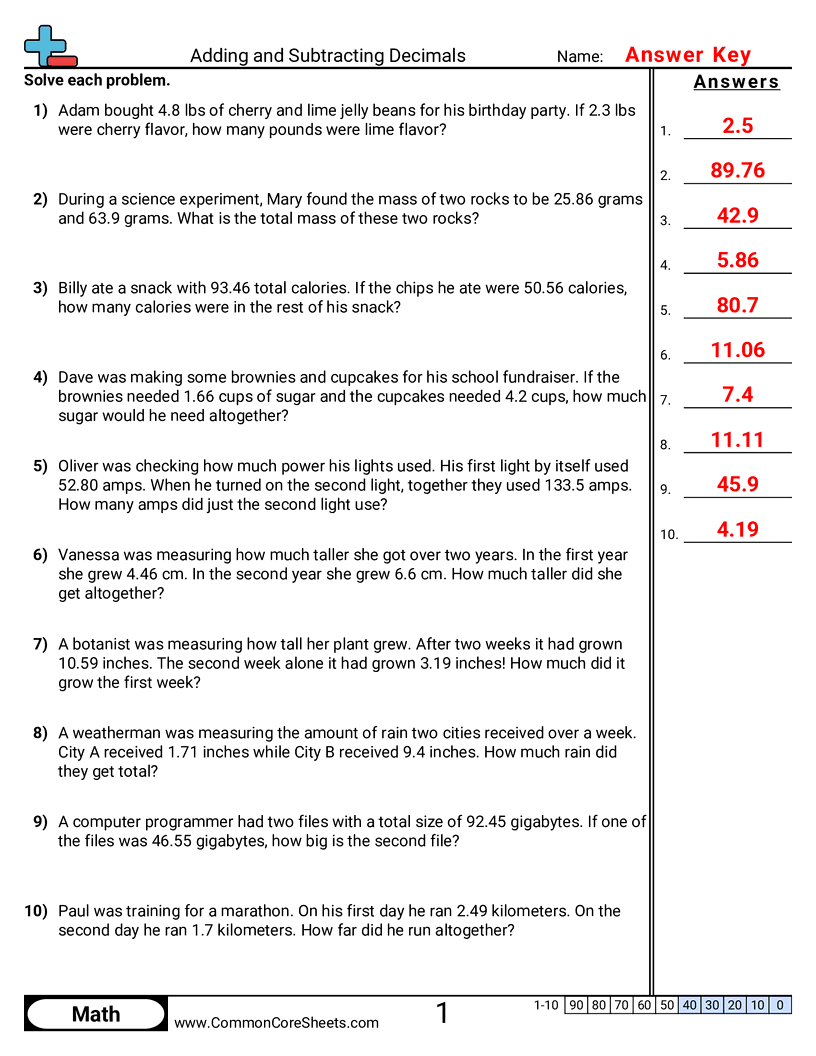
Add decimals to find a total when numbers include tenths and hundredths. Subtract decimals to find how much more or how much is left. Line up decimal points so each place value stays in the right column. Read word problems and decide whether to add or subtract to solve them. Write the answer with the decimal in the correct place.
5nbt7
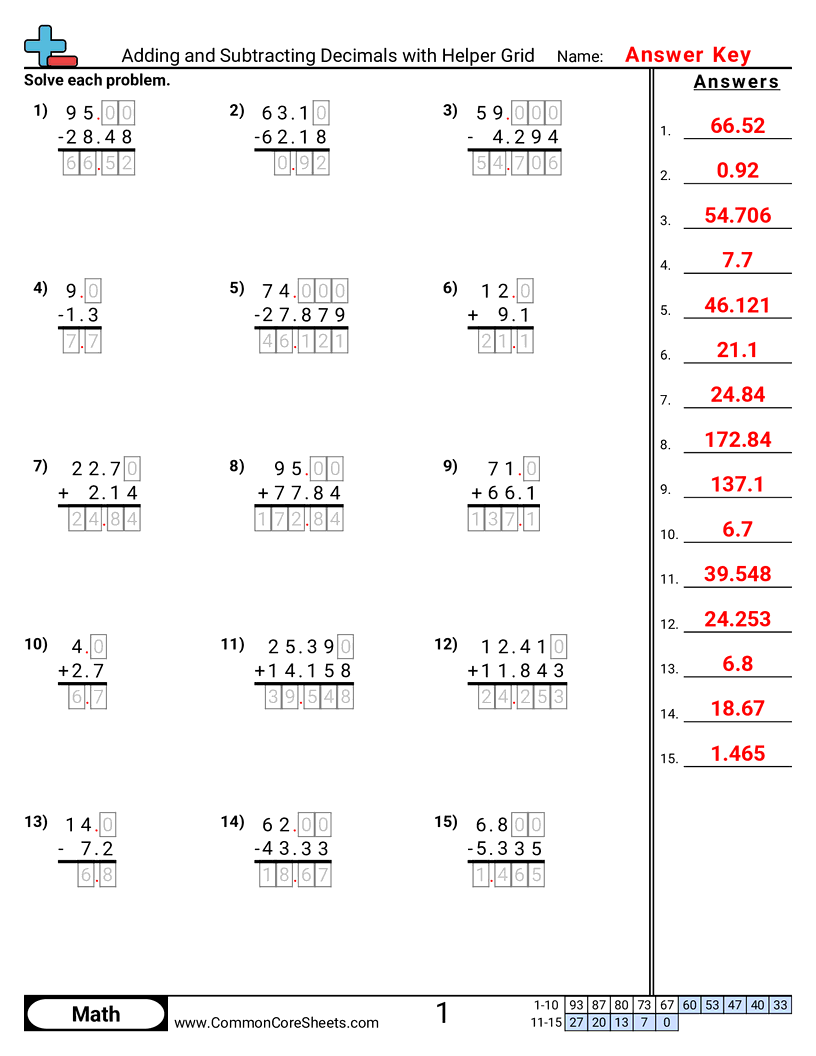
Line up decimals by place value using a helper grid so the digits match up correctly. Add decimals accurately, including when you need to regroup. Subtract decimals accurately, including when you need to regroup. Keep the decimal point in the right place when writing the final answer.
5nbt7
Add two decimal numbers by starting at the first number and making jumps on a number line. Use tenths marks to keep track of how far each jump moves. Read and write the decimal you land on as the sum.
5nbt7
Add several decimal numbers to find one total. Line up decimal points so each place value is added in the right column. Regroup when the digits in a column add to 10 or more. Keep track of tenths and hundredths so the decimal ends up in the correct spot in the sum.
5nbt7
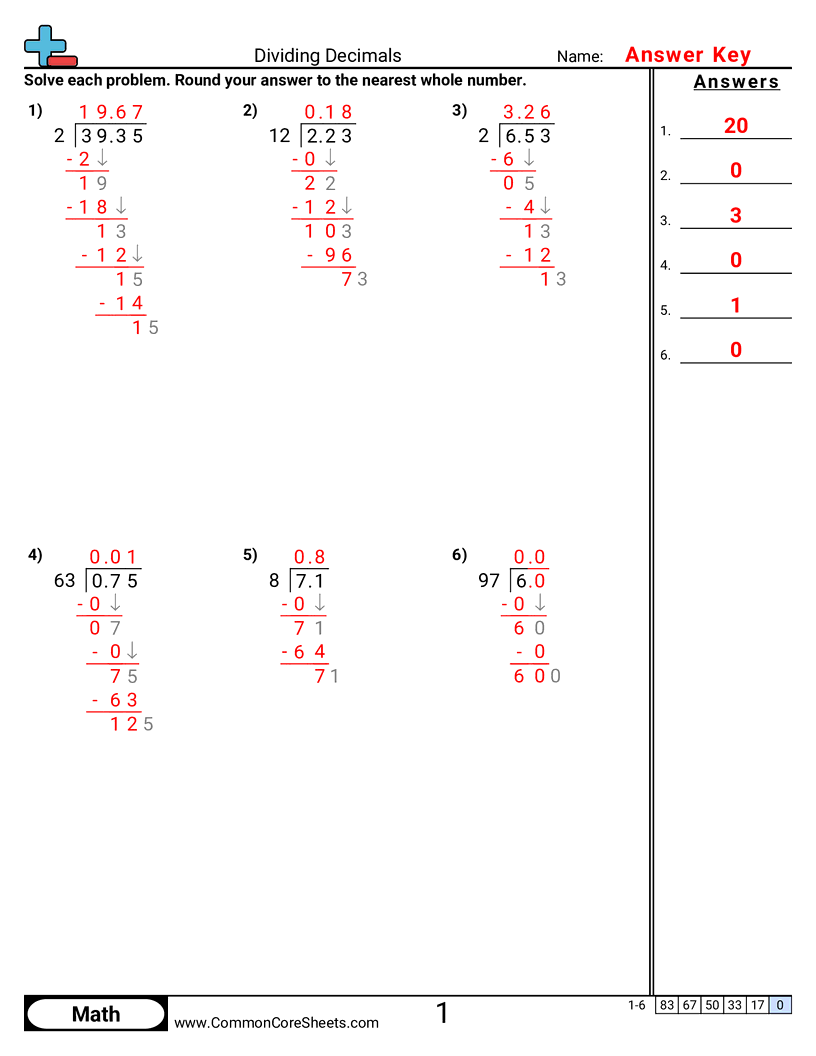
Move the decimal point to turn the divisor into a whole number before dividing. Use long division to place the decimal point correctly in the quotient. Keep dividing past the decimal to get an exact answer or a decimal answer.
5nbt7
Divide decimals by decimals using the partial quotients (chunking) method. Break a division problem into easier steps by subtracting groups of the divisor and keeping a running total of the quotient. Place the decimal correctly in the quotient based on the values in the dividend and divisor. Multiply to find helpful chunks of the divisor (like 10× or 0.1×) that fit into the dividend.
5nbt7
Practice rounding decimals to make easier numbers to multiply in your head. Estimate the product of a decimal and a whole number using friendly numbers. Estimate the product of two decimals by rounding to tenths or whole numbers.
5nbt7
Multiply decimals using the regular multiplication steps you use for whole numbers. Place the decimal point in the product by counting decimal places in the factors. Keep digits lined up correctly in vertical (column) multiplication. Handle carrying when multiplying multi-digit numbers that include decimals.
5nbt7
Multiply two decimals to find the product. Use an area model (grid) to show what a decimal multiplication problem means.
5nbt7
Multiply a whole number by a decimal to find the product. Use a grid or area model to show what the multiplication means.
5nbt7
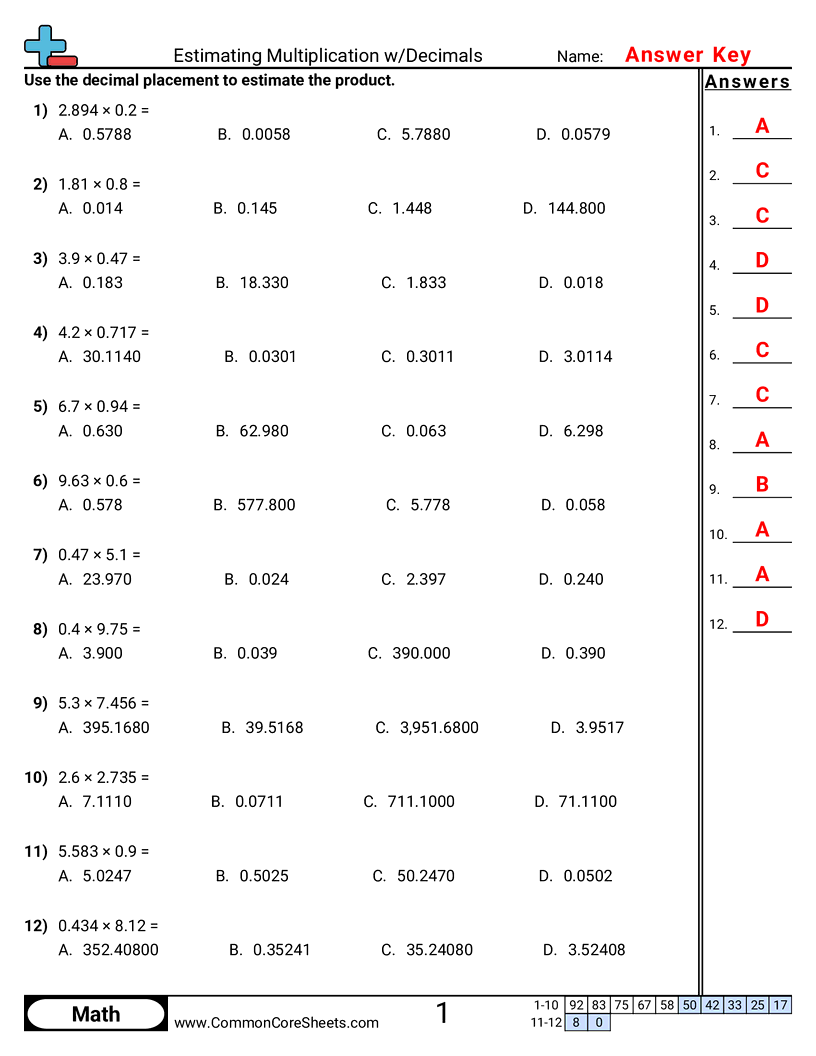
Place the decimal point correctly in a multiplication problem with decimals. Count decimal places in the factors to decide how many decimal places the product should have. Multiply the numbers as whole numbers first, then put the decimal back in the right spot.
5nbt7
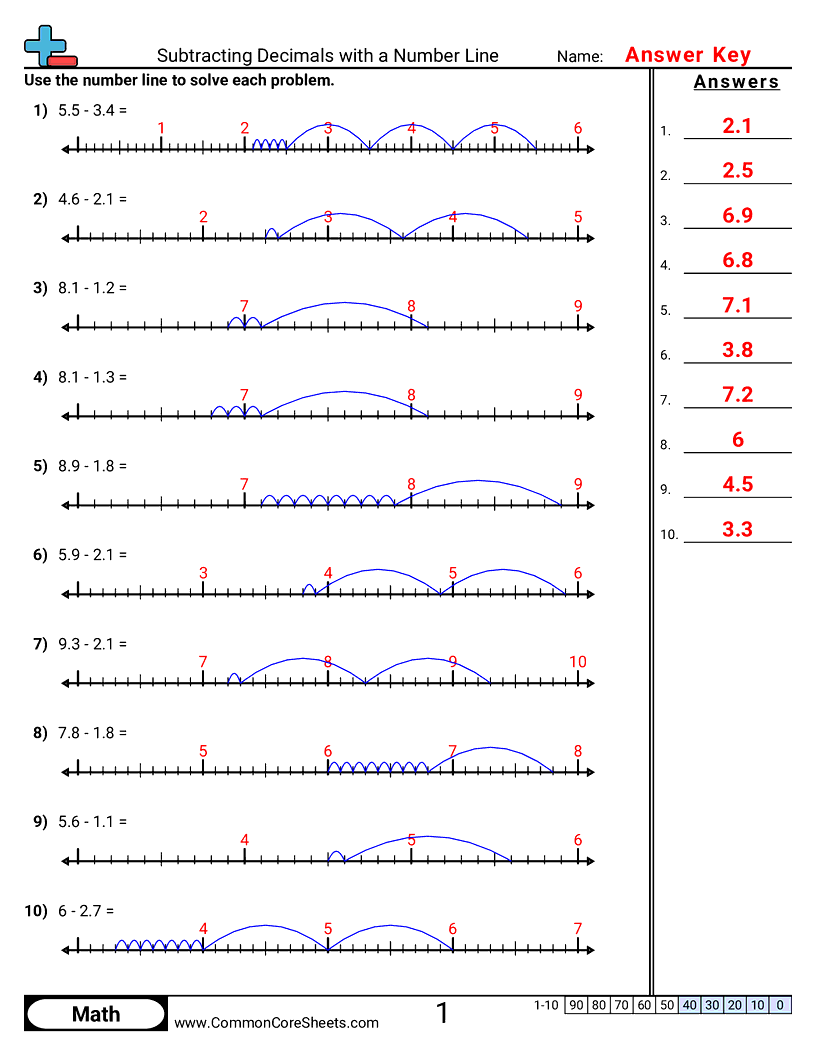
Use a number line to subtract one decimal from another by jumping backward the right amount. Read and place decimals on a number line so you can start and end at the correct points. Break a decimal subtraction into smaller steps (like tenths and hundredths) to keep track of each jump. Find the difference between two decimals and write the answer with the decimal point in the right place.
Playwire Advertisement